Op-Eds & Columns
Acharya Prashant is a philosopher and author, an alumnus of IIT Delhi and IIM Ahmedabad. He is among the most widely read philosophical columnists writing in India today, with more than 190 published columns ranging across climate and consumption, elections and ideology, caste and religion, gender, education, geopolitics, technology, and the inner life.
What unifies this range is a single method: tracing every public crisis back to the unexamined self that produces it.
- TOTAL COLUMNS
- PUBLICATIONS









Featured Columns
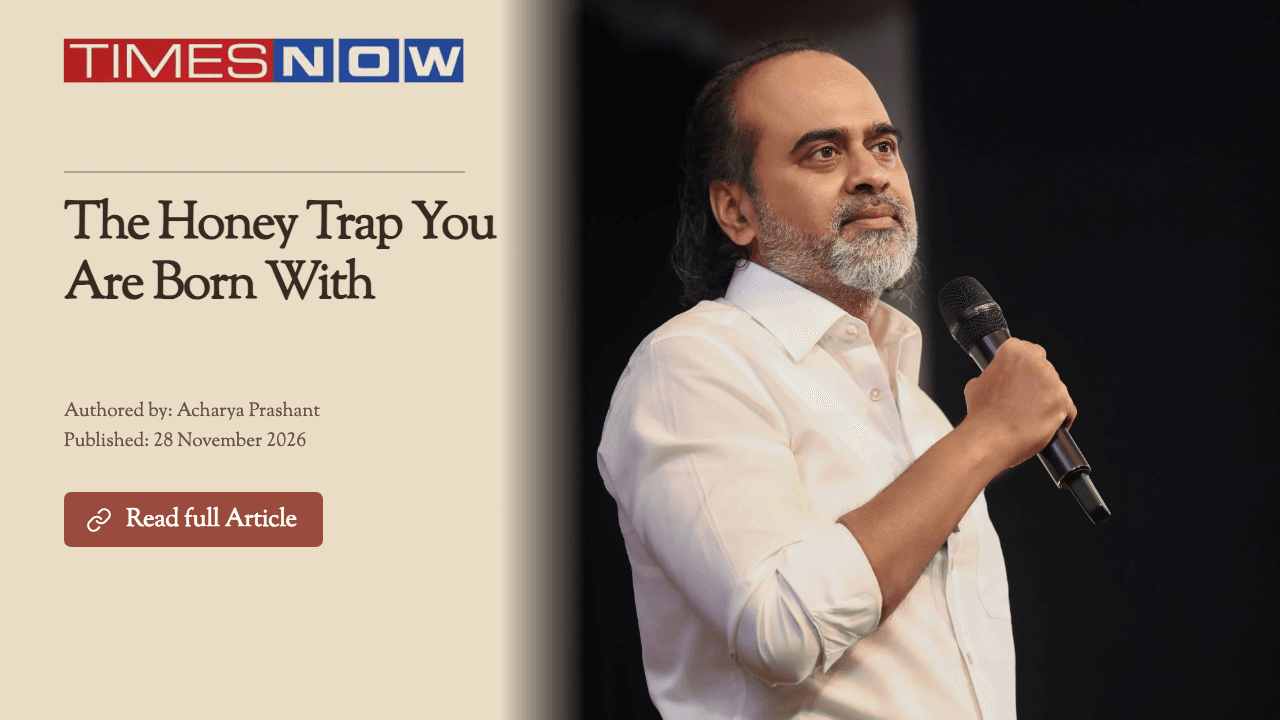
Times Now28 Nov '26
The Honey Trap You Are Born With
From ambition and power to sex and desire, a deeper exploration of the ego, why we chase external validation and why physical pleasures can never fulfil us.
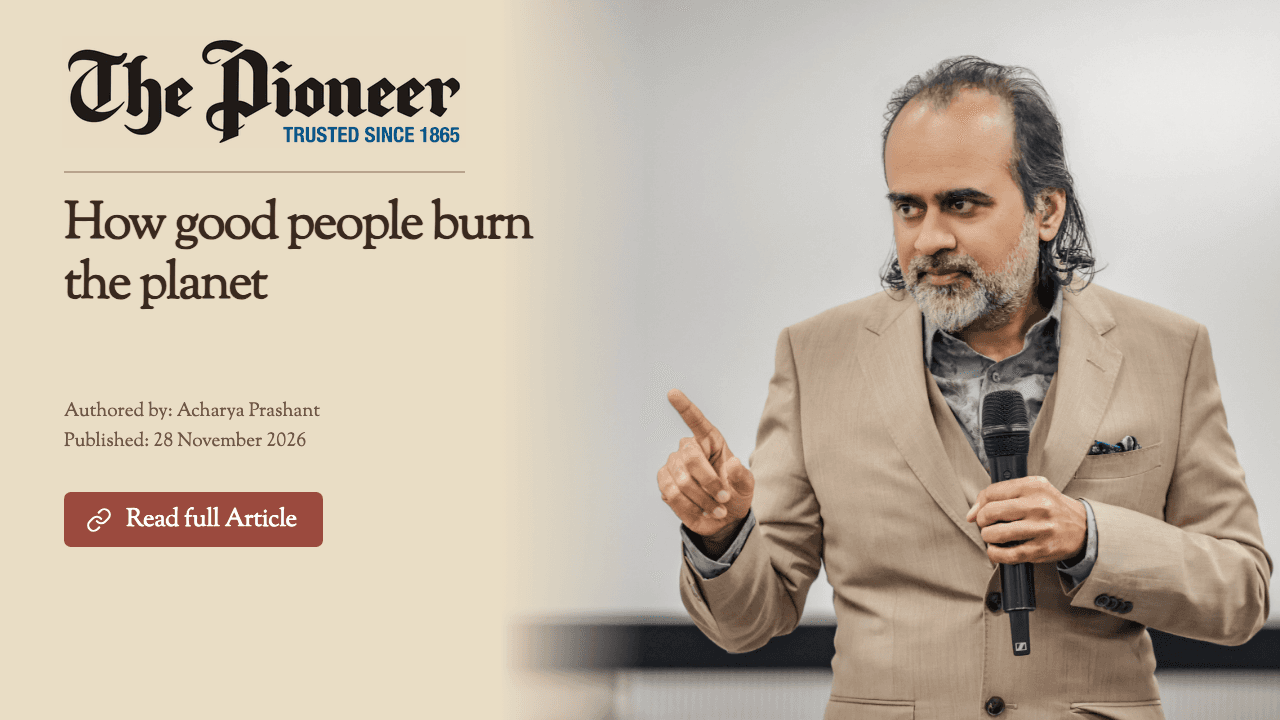
The Pioneer28 Nov '26
How good people burn the planet
Go to a wedding in a small Indian town, and you’ll often hear the generator before you hear the band. Somewhere behind the tent, near the cooks, an old diesel set chugs away all night so that the lights never dip and the music never stops.
Times Now22 Nov '26
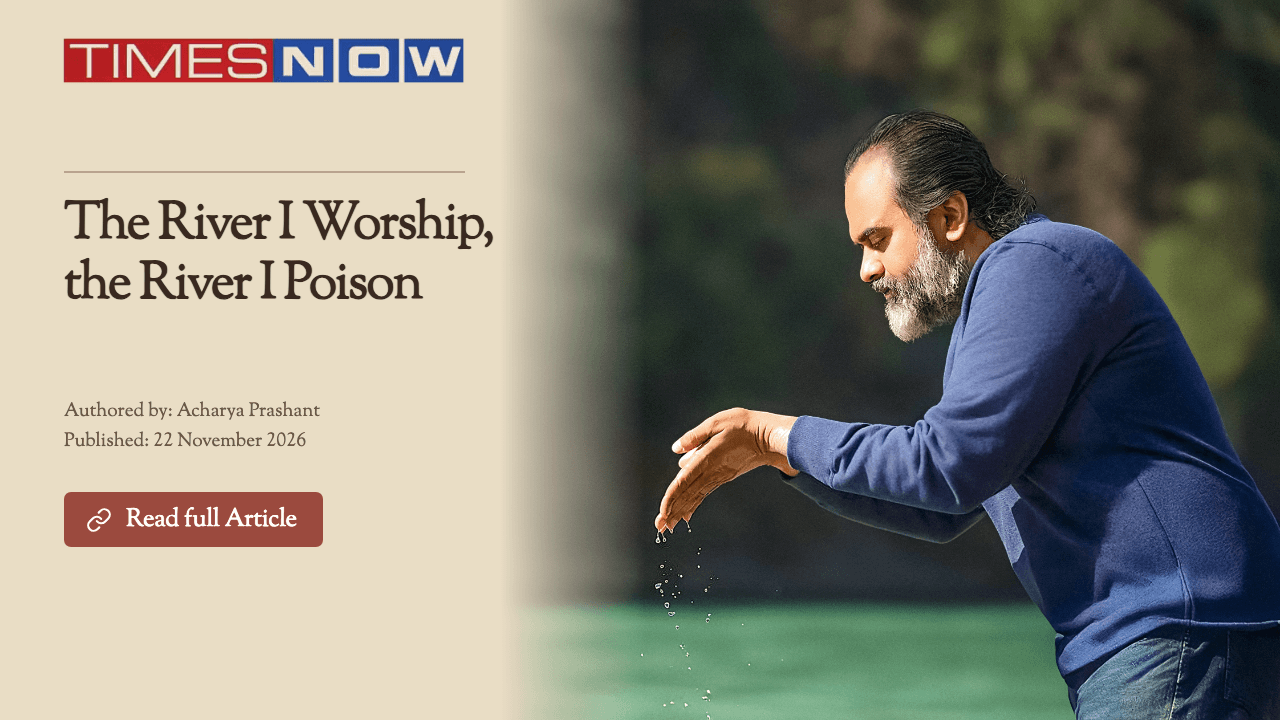
The River I Worship, the River I Poison
Acharya Prashant examines Delhi's Yamuna pollution, questioning the contradiction between worshipping rivers and poisoning them through everyday choices, unchecked consumption and misplaced responsibility.

Times Now14 Nov '26
Children’s Day: What Are We Really Giving Our Children?
The article highlights the importance of fostering genuine understanding and freedom in children, rather than imposing expectations based on parental ego or societal norms.
The Pioneer07 Nov '26
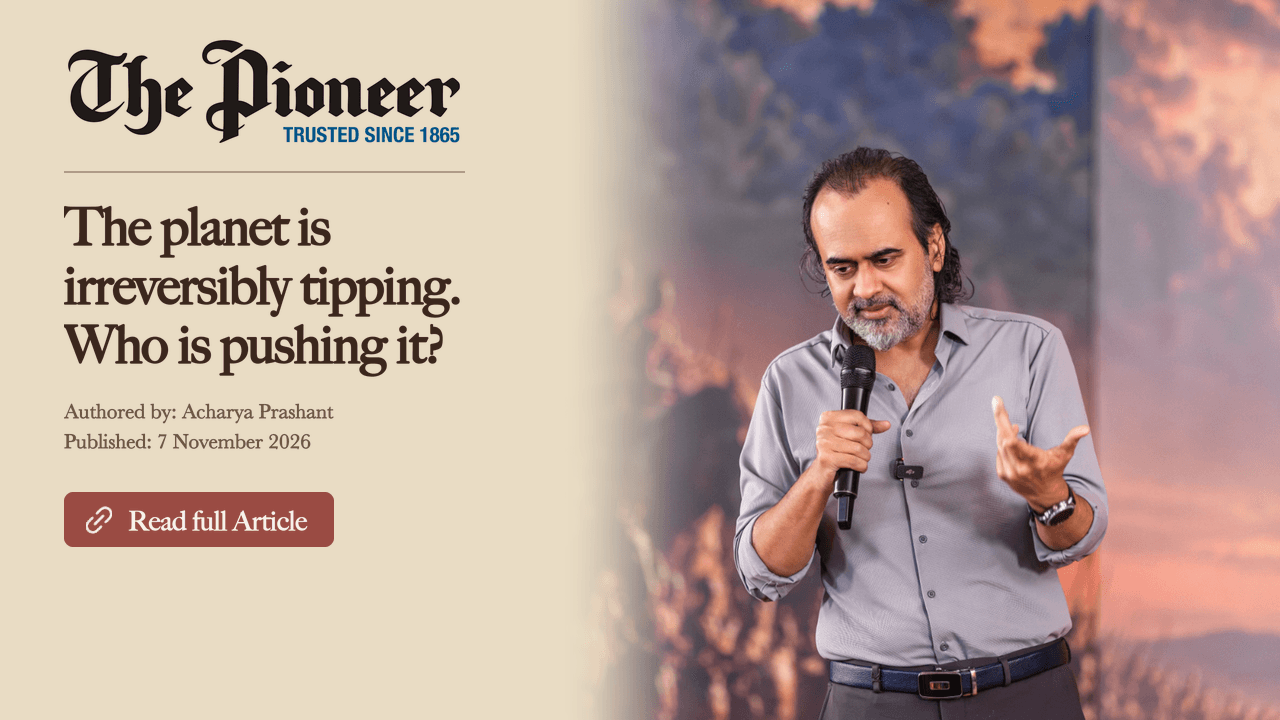
The planet is irreversibly tipping. Who is pushing it?
We have begun to speak of the future climate as though we could settle the bill later. We shall keep emitting greenhouse gases, warm the planet beyond the limit we have agreed upon and, when technology has improved, bring the temperature down again.
Times Now06 Nov '26
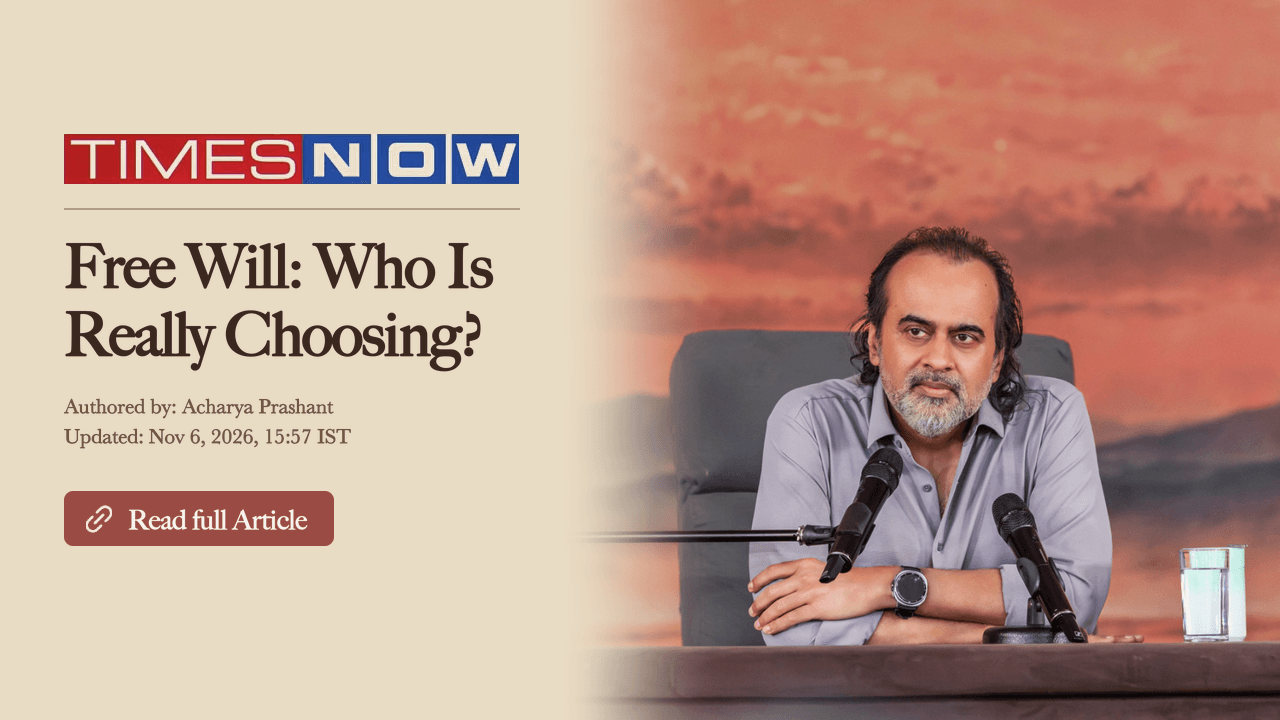
Free Will: Who Is Really Choosing?
"In 1983, neuroscientist Benjamin Libet published an experiment that put a very familiar human claim in some difficulty. Volunteers were asked to move a wrist whenever they wished and to report the moment at which they became conscious of wanting to move. In one set of trials, the brain activity associated with preparing the movement had begun about 350 milliseconds before the reported intention. So the brain was already preparing to act, and the person had not yet reported deciding."

Patrika04 Nov '26
देहरी पर दीया और भीतर बोध का उजास हो
दीपावली पर घर साफ होते हैं, पुरानी वस्तुएं हटती हैं, कोने चमकते हैं। उधर बाजार कपड़ों, आभूषणों और उपहारों से भर जाते हैं। एक ओर घर से अनावश्यक सामान निकालते हैं, दूसरी ओर नई वस्तुओं से उसे फिर भरते हैं। लेकिन जिस गंभीरता से घर साफ करते हैं, क्या उसी गंभीरता से अपने जीवन की भी जांच करते हैं? दीपावली प्रकाश का पर्व है।
Times Now31 Oct '26
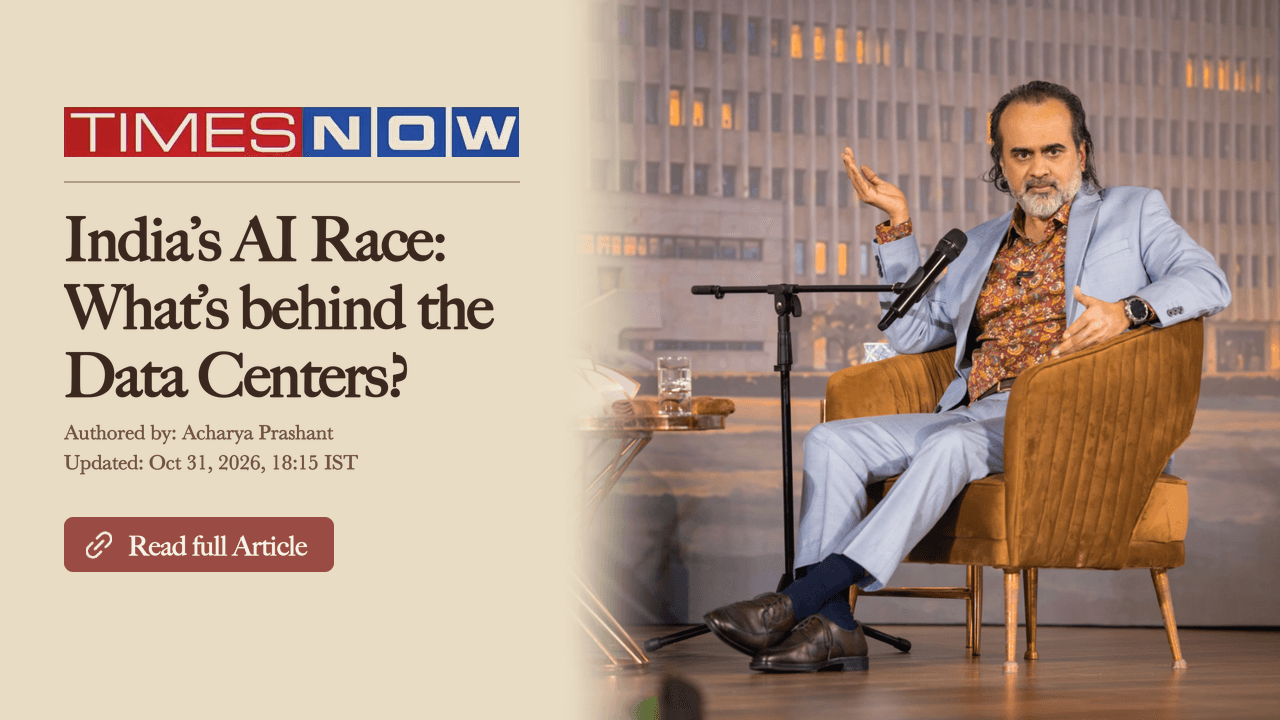
India's AI Race: What's behind the Data Centers?
India’s data-centre boom raises questions about environmental costs, public benefits and whether AI infrastructure is serving genuine human needs or amplifying endless consumption.
The Pioneer31 Oct '26
Who Is Creating the Problems We Keep Solving?
During London Climate Action Week earlier this year, I was asked where an ordinary individual should begin acting against climate change. The word ‘begin’ carried an assumption: we have been acting all along.
FOR COMMISSIONING EDITORS
Request Acharya Prashant to Write.
The publications that carry his columns offer their readers something rare: writing that treats the day's news as a doorway to something deeper.For a column, a feature, or syndication, editors are welcome to write to the editorial desk.
Email
Languages
EnglishHindi
Formats
WeeklyFortnightlyMonthlyFeatureLong-form Essay
Areas
Environment, Technology & the Future of CivilizationNation, Governance & Cultural IntrospectionGlobal Affairs, Geopolitics & Human NatureSociety, Culture & Contemporary Social IssuesMental Health, Psychology & Self-KnowledgePhilosophy, Ethics & Self-EnquiryFestivals, Symbolism & Inner Renewal
Full Index
Times Now22 Nov '26
The River I Worship, the River I Poison
Acharya Prashant examines Delhi's Yamuna pollution, questioning the contradiction between worshipping rivers and poisoning them through everyday choices, unchecked consumption and misplaced responsibility.
Times Now31 Oct '26
India's AI Race: What's behind the Data Centers?
India’s data-centre boom raises questions about environmental costs, public benefits and whether AI infrastructure is serving genuine human needs or amplifying endless consumption.
Times Now16 Oct '26
Big Meat, Big Dairy, and the Ugly Face of Climate Denial
As meat and dairy companies embrace sustainability claims, the environmental and ethical costs of animal agriculture remain. Can green labels, technological fixes and cultural beliefs justify continued exploitation, or do we need deeper change?
Times Now14 Sep '26
A Billionaire's Masterplan: Block the Sun, Keep the Carbon?
"How much does it take to reduce emissions? In principle, nothing much. No invention is pending, no launch window has to be waited for, no breakthrough in materials science is required, no treaty has to be signed by anyone who does not want to sign it. What is required is that a very large number of people desire less than they currently desire, and that is the one thing no engineer can deliver and no summit can negotiate. So the simple route goes untried, and in its place arrive proposals of escalating magnificence."
Times Now31 Aug '26
Nepal Tragedy: The One Word No One Wants to Say
"This was a climate catastrophe, and not the first; the very same valley was struck in almost this way a year ago, and the whole Himalayan arc now does this two and three times a season. The word, then, is available, and it is accurate, and still it is the one word we will not say plainly. That refusal deserves more attention than the flood itself, because the refusal is the disease, and the flood only its symptom."