Acharya Prashant is a philosopher and author, an alumnus of IIT Delhi and IIM Ahmedabad. He is among the most widely read philosophical columnists writing in India today, with more than 190 published columns ranging across climate and consumption, elections and ideology, caste and religion, gender, education, geopolitics, technology, and the inner life.
What unifies this range is a single method: tracing every public crisis back to the unexamined self that produces it.
FOR COMMISSIONING EDITORS
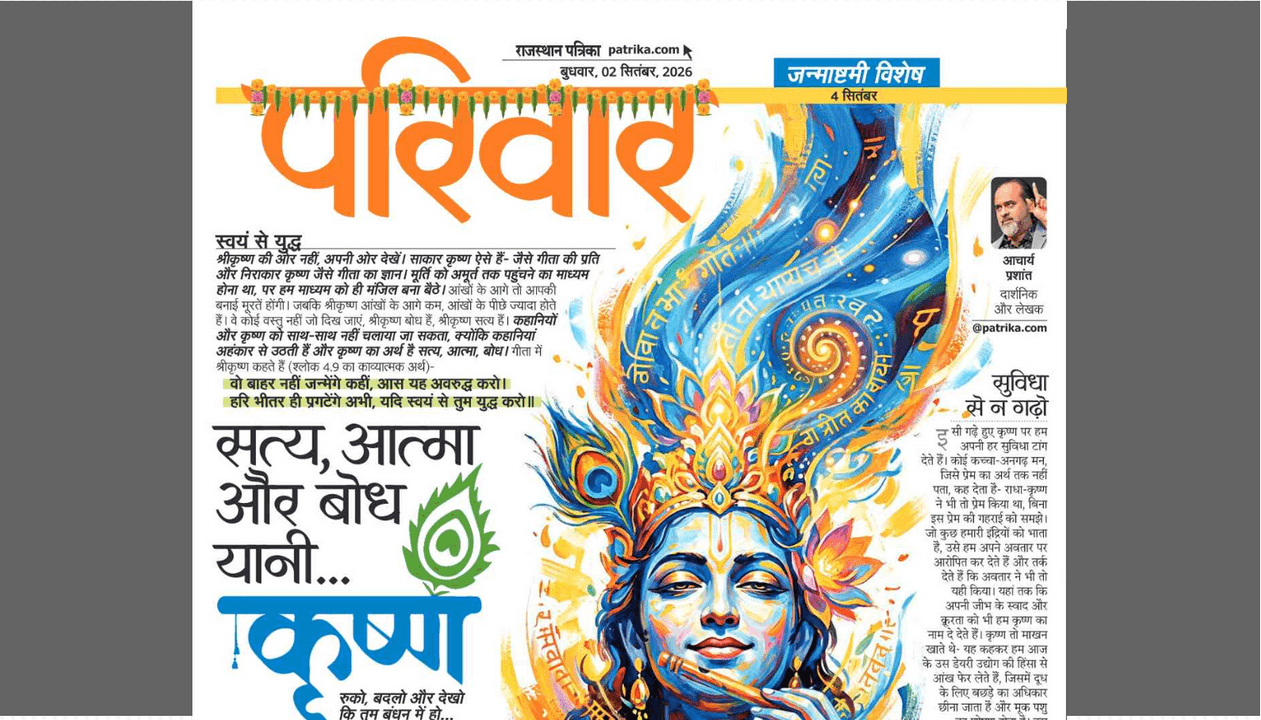
In this special Janmashtami feature published in Rajasthan Patrika, philosopher and author Acharya Prashant explains why the true Krishna is not an idol to be worshipped from a distance, but Truth, the Self, and Realization (Satya, Atma, Bodh) itself.

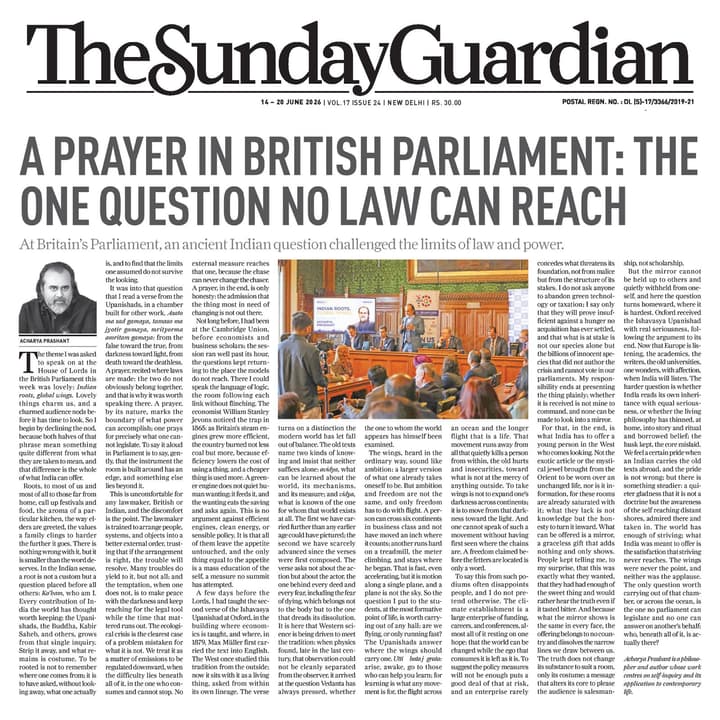
"The theme I was asked to speak on at the House of Lords in the British Parliament this week was lovely: Indian roots, global wings. Lovely things charm us, and a charmed audience nods before it has time to look. So I begin by declining the nod, because both halves of that phrase mean something quite different from what they are taken to mean, and that difference is the whole of what India can offer."

"The parks of London do something to the mind, if one lingers in them long enough without an agenda. Walking through one in the late evening, when the city has begun to loosen its grip, and the light is going amber behind the beech trees, something in the usual interior traffic pauses."

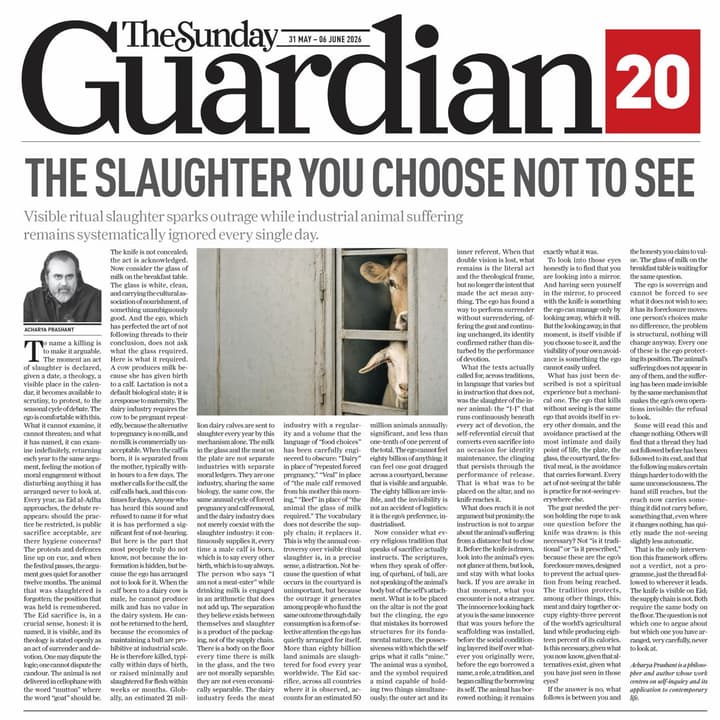
"Every year, as Eid al-Adha approaches, the debate reappears: should the practice be restricted, is public sacrifice acceptable, are there hygiene concerns? The protests and defences line up on cue, and when the festival passes, the argument goes quiet for another twelve months. The animal that was slaughtered is forgotten; the position that was held is remembered."

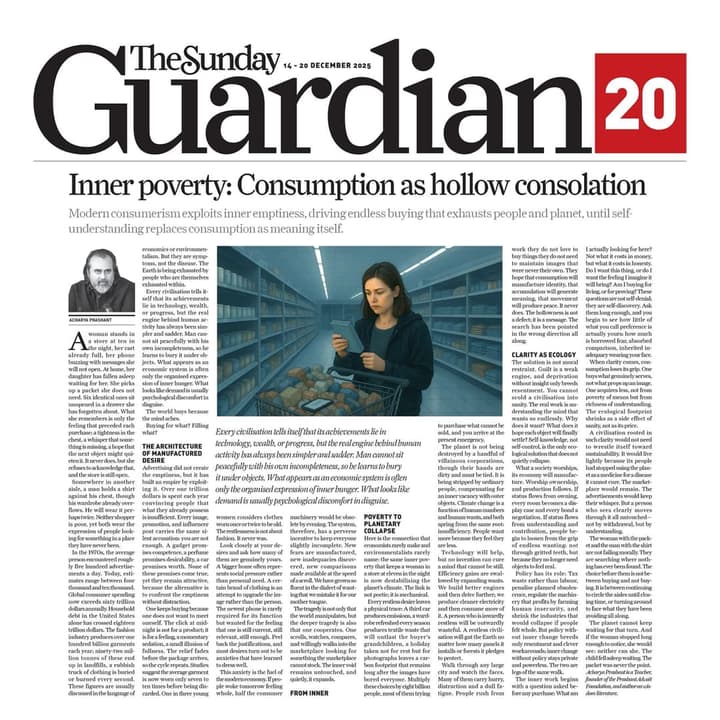
"The sense of incompletion that propels a young professional to book a flight to a destination he has already mentally photographed, to build a house with rooms that will rarely be used; this is not a rational economic decision. It is the ego’s oldest and most relentless reflex: I am insufficient as I am; adding, acquiring, displaying will resolve the insufficiency."

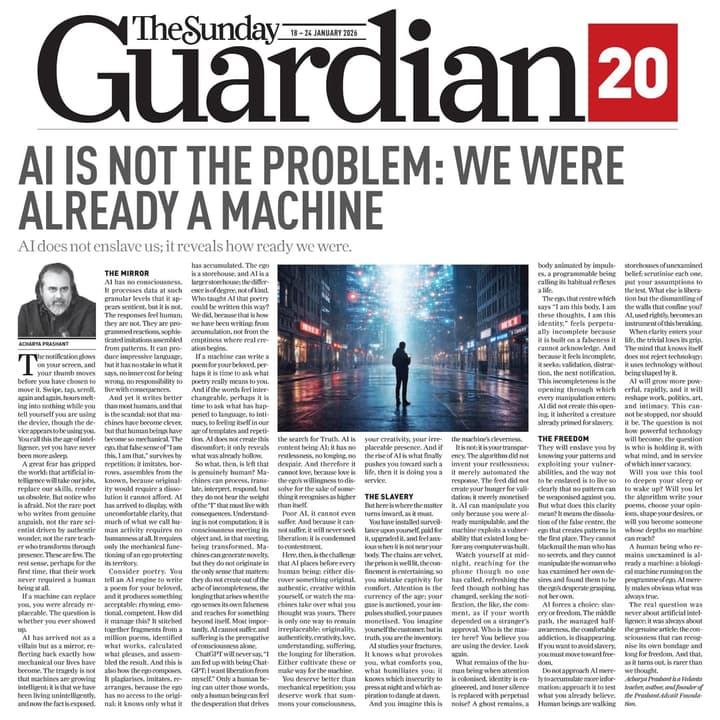
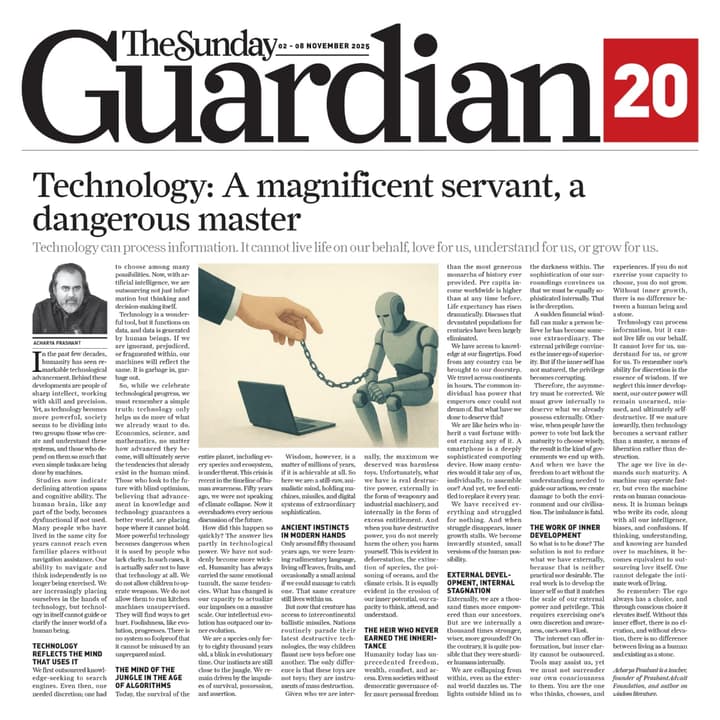
"AI has arrived not as a villain but as a mirror, reflecting back exactly how mechanical our lives have become. The tragedy is not that machines are growing intelligent; it is that we have been living unintelligently, and now the fact is exposed."

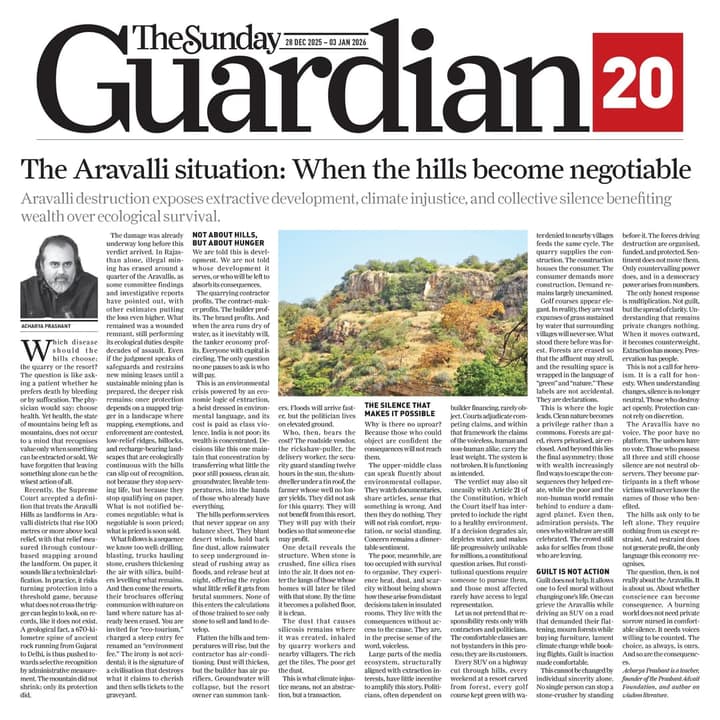
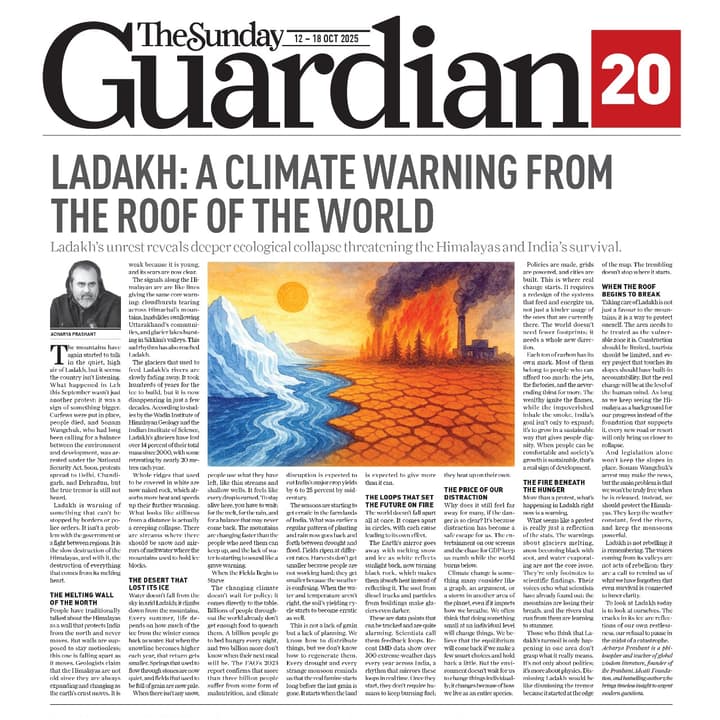
"The hills perform services that never appear on any balance sheet. They blunt desert winds, hold back fine dust, allow rainwater to seep underground instead of rushing away as floods, and release heat at night, offering the region what little relief it gets from brutal summers. None of this enters the calculations of those trained to see only stone to sell and land to develop."

"The tragedy is not only that the world manipulates, the deeper tragedy is that one cooperates. One scrolls, watches, compares, and willingly walks into the marketplace looking for something the marketplace cannot stock. The inner void remains untouched, and quietly, it expands."

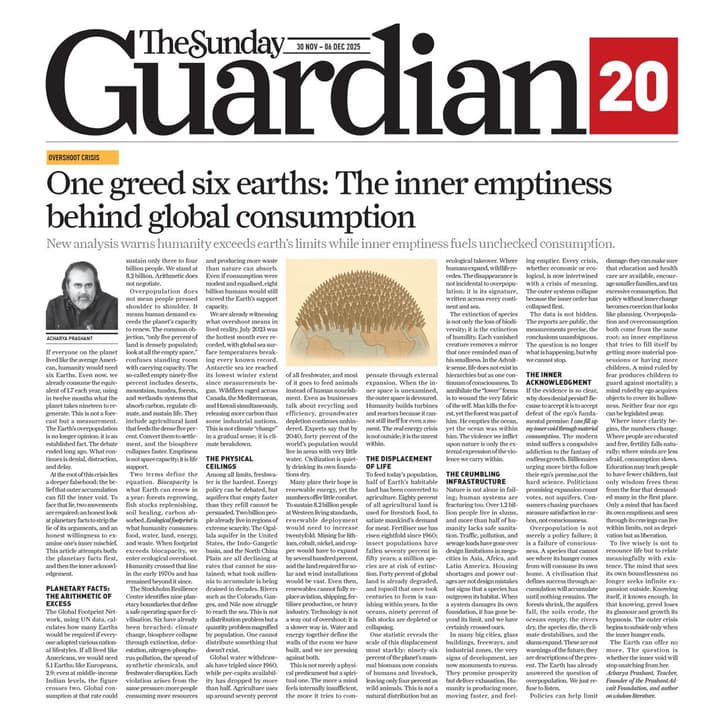
"Overpopulation is not merely a policy failure; it is a failure of consciousness. A species that cannot see where its hunger comes from will consume its own home. A civilisation that defines success through accumulation will accumulate until nothing remains. The forests shrink, the aquifers fall, the soils erode, the oceans empty, the rivers dry, the species die, the climate destabilises, and the slums expand. These are not warnings of the future; they are descriptions of the present."

"Technology can process information, but it cannot live life on our behalf. It cannot love for us, understand for us, or grow for us. To remember one’s ability for discretion is the essence of wisdom. If we neglect this inner development, our outer power will remain unearned, misused, and ultimately self-destructive. If we grow inwardly, then technology becomes a servant rather than a master, a means of liberation rather than destruction."

"Those who think that Ladakh's turmoil is only happening in one area don't grasp what it really means. It’s not only about politics; it's more about physics. Dismissing Ladakh would be like dismissing the tremor because it started at one edge of the map. The trembling doesn't stop where it starts."

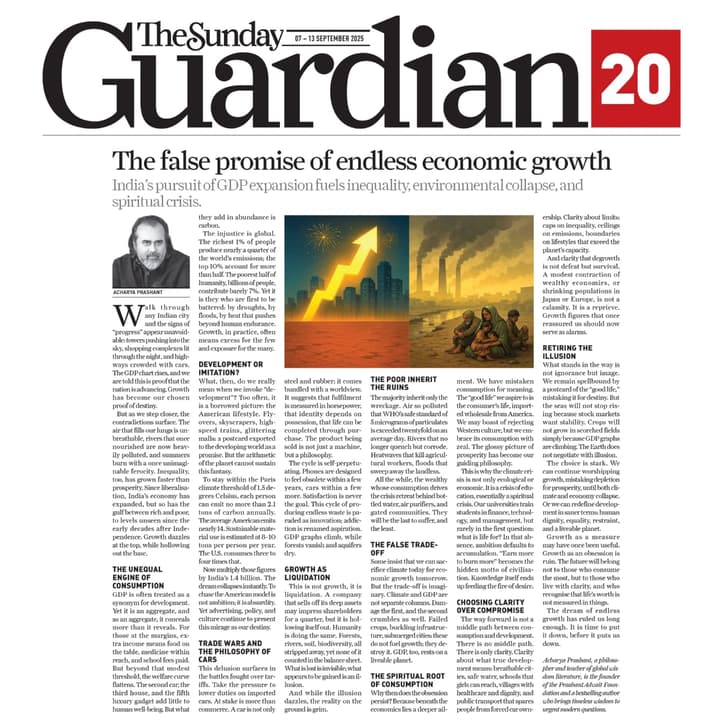
"Growth as a measure may have once been useful. Growth as an obsession is ruin. The future will belong not to those who consume the most, but to those who live with clarity, and who recognise that life’s worth is not measured in things."

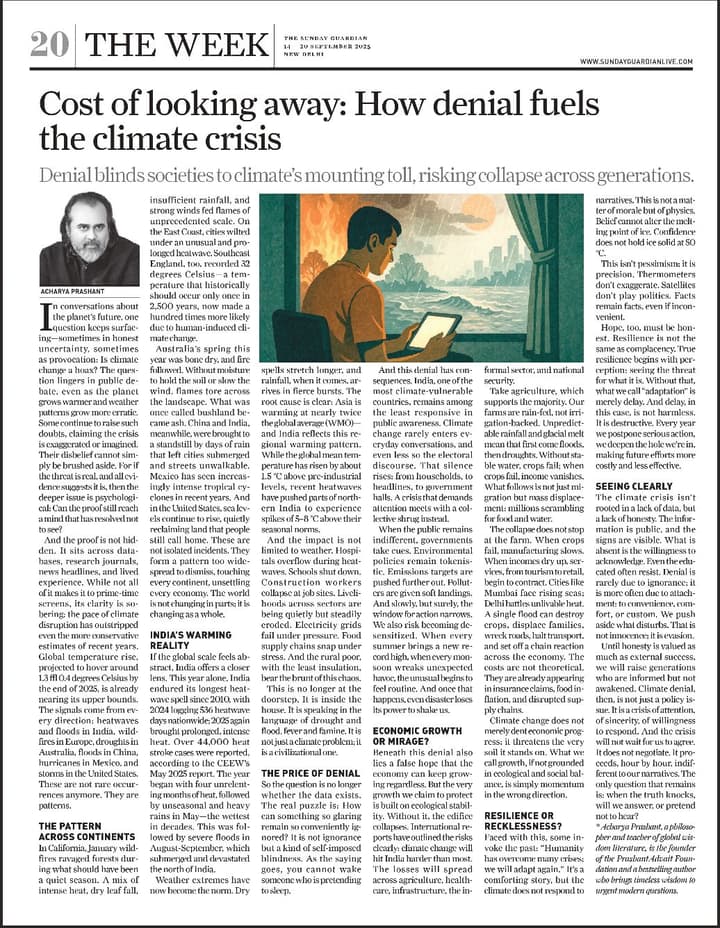
"Until honesty is valued as much as external success, we will raise generations who are informed but not awakened. Climate denial, then, is not just a policy issue. It is a crisis of attention, of sincerity, of willingness to respond. And the crisis will not wait for us to agree. It does not negotiate. It proceeds, hour by hour, indifferent to our narratives. The only question that remains is: when the truth knocks, will we answer, or pretend not to hear?"

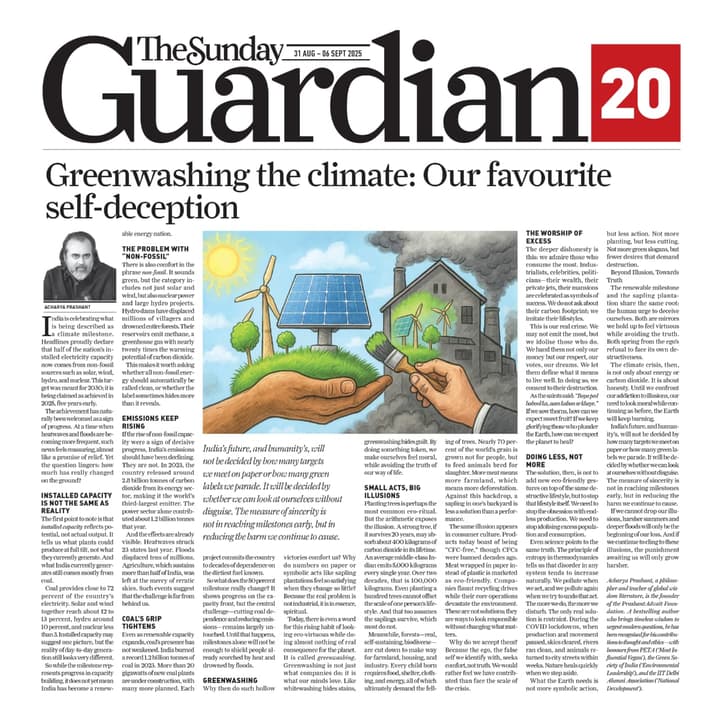
"India’s future, and humanity’s, will not be decided by how many targets we meet on paper or how many green labels we parade. It will be decided by whether we can look at ourselves without disguise. The measure of sincerity is not in reaching milestones early, but in reducing the harm we continue to cause."

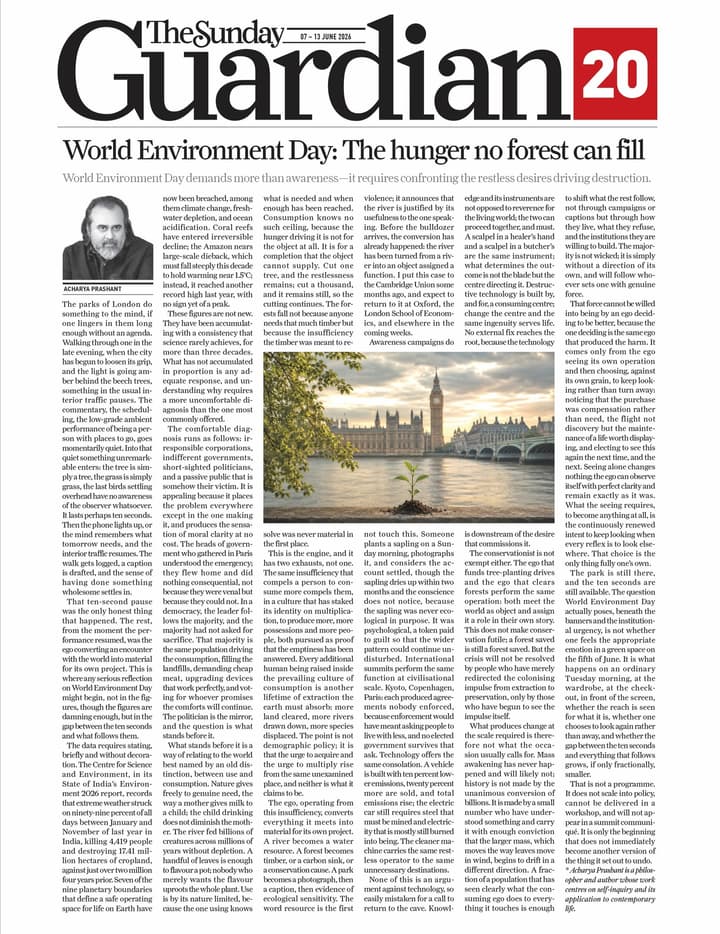
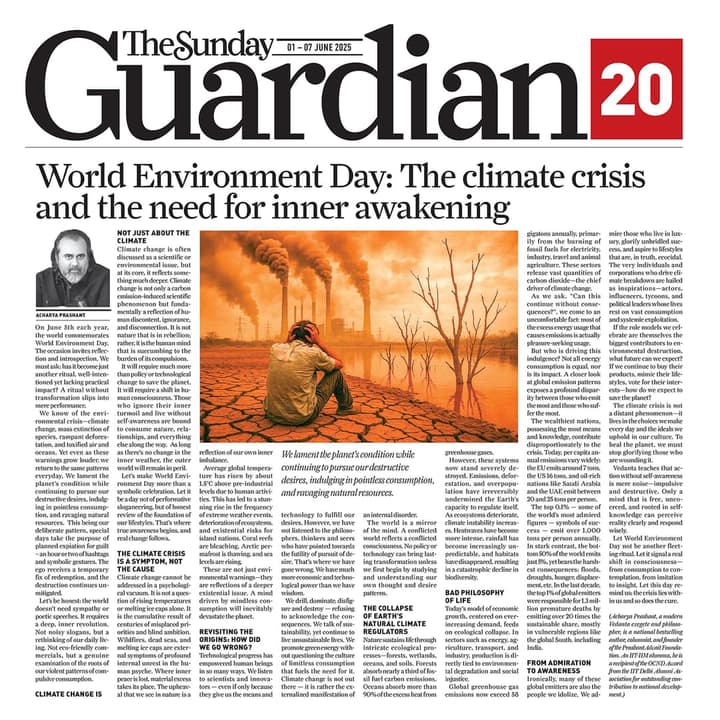
"On June 5th each year, the world commemorates World Environment Day. The occasion invites reflection and introspection. We must ask: has it become just another ritual, well-intentioned yet lacking practical impact?"

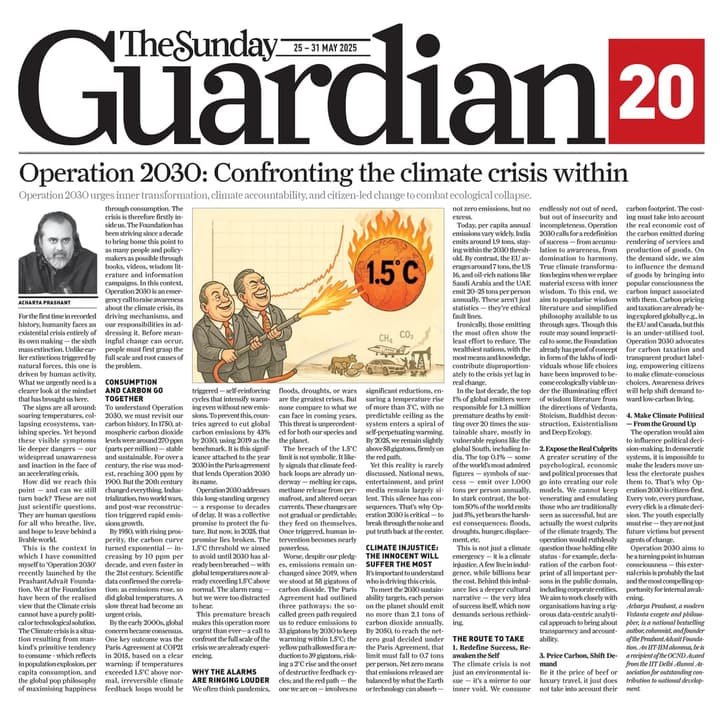
"For the first time in recorded history, humanity faces an existential crisis entirely of its own making — the sixth mass extinction. Unlike earlier extinctions triggered by natural forces, this one is driven by human activity."

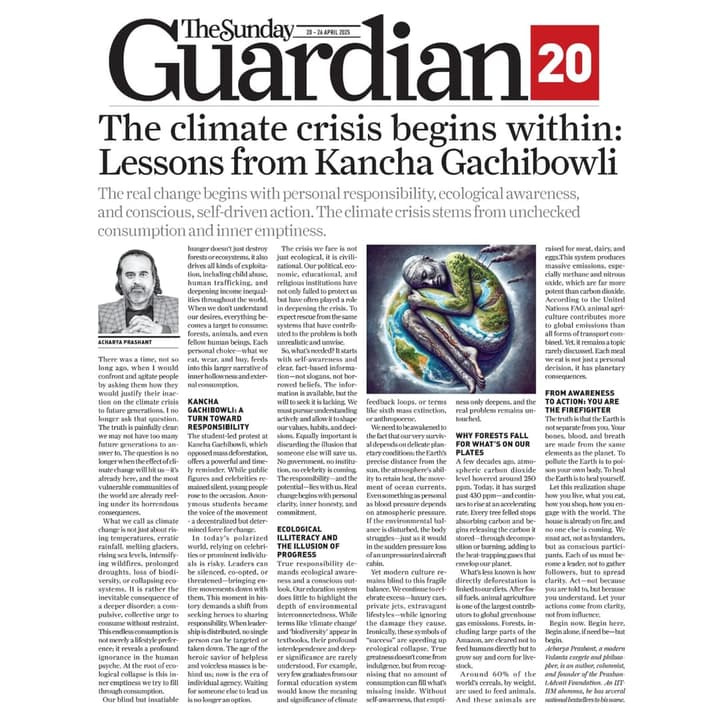
"There was a time, not so long ago, when I would confront and agitate people by asking them how they would justify their inaction on the climate crisis to future generations. I no longer ask that question."

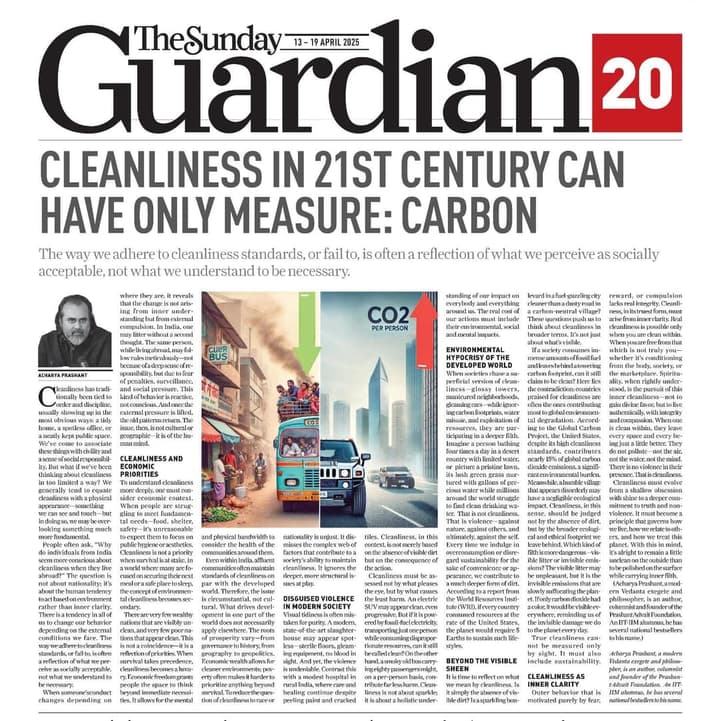
"Cleanliness has traditionally been tied to order and discipline, usually showing up in the most obvious ways: a tidy home, a spotless office, or a neatly kept public space. We’ve come to associate these things with civility and a sense of social responsibility."

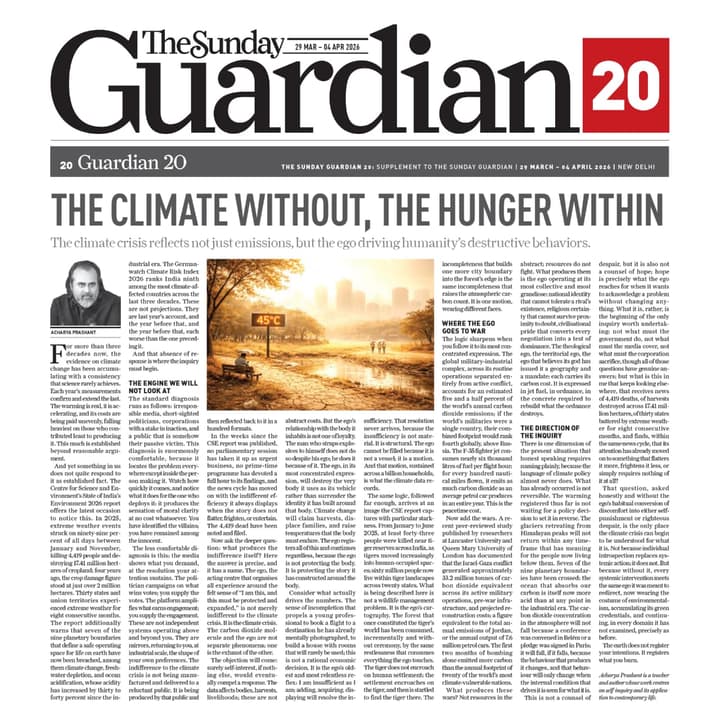
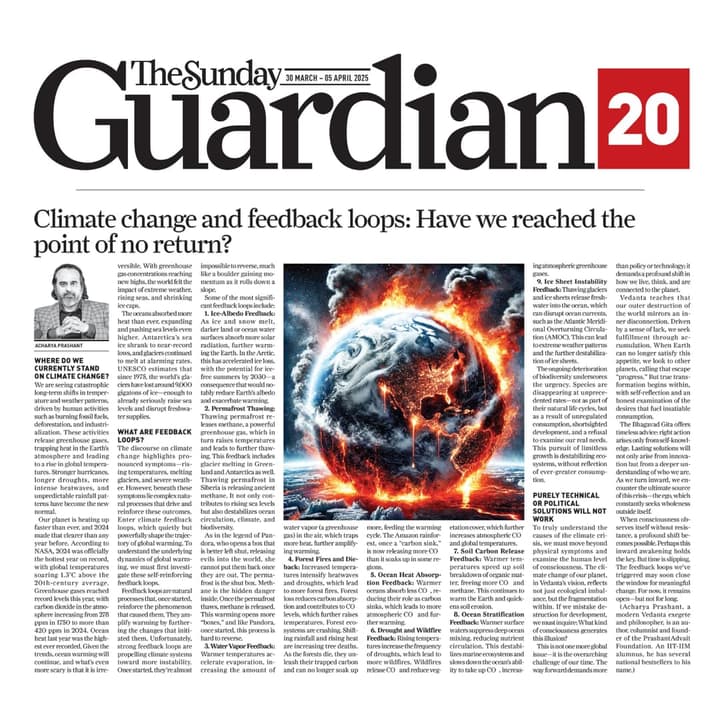
"Where do we currently stand on climate change? We are seeing catastrophic long-term shifts in temperature and weather patterns, driven by human activities such as burning fossil fuels, deforestation, and industrialization."

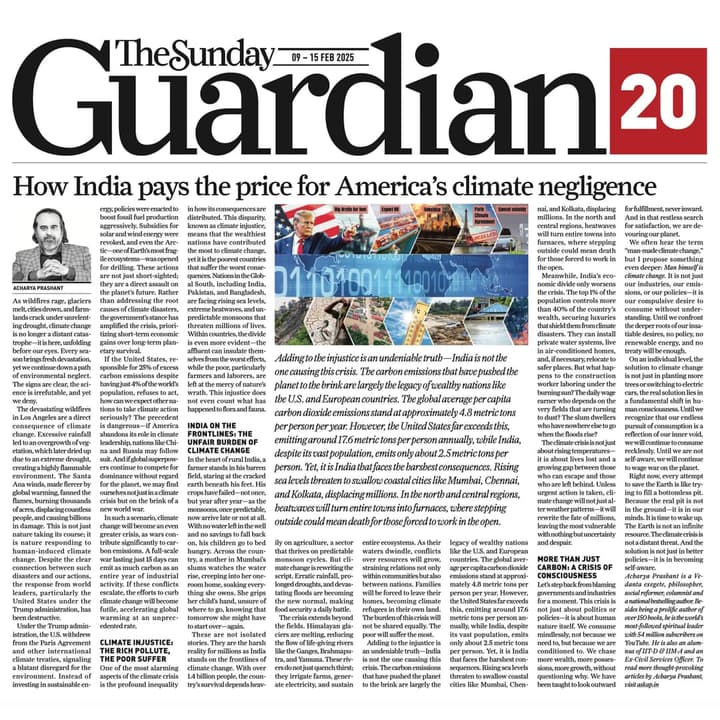
"As wildfires rage, glaciers melt, cities drown, and farmlands crack under unrelenting drought, climate change is no longer a distant catastrophe—it is here, unfolding before our eyes."

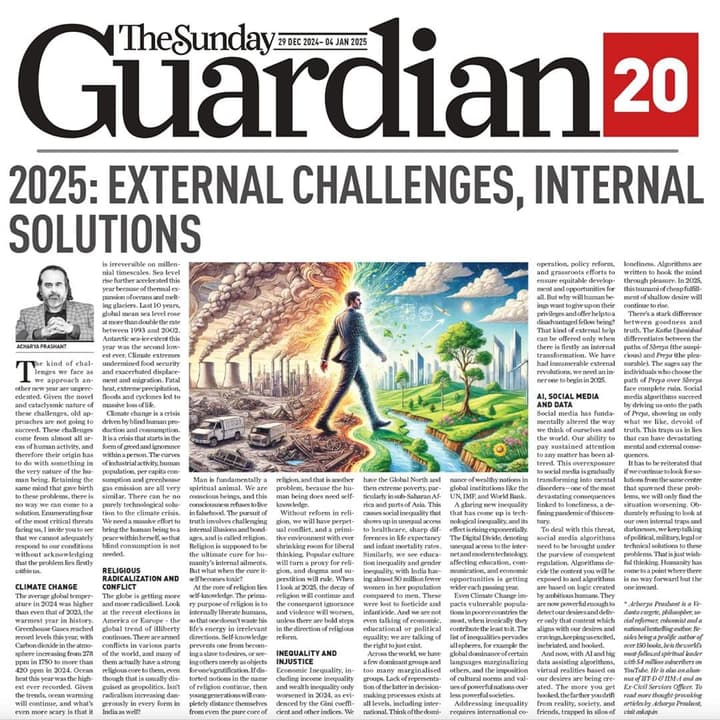
"The kind of challenges we face as we approach another new year are unprecedented. Given the novel and cataclysmic nature of these challenges, old approaches are not going to succeed."