Acharya Prashant is a philosopher and author, an alumnus of IIT Delhi and IIM Ahmedabad. He is among the most widely read philosophical columnists writing in India today, with more than 190 published columns ranging across climate and consumption, elections and ideology, caste and religion, gender, education, geopolitics, technology, and the inner life.
What unifies this range is a single method: tracing every public crisis back to the unexamined self that produces it.
FOR COMMISSIONING EDITORS
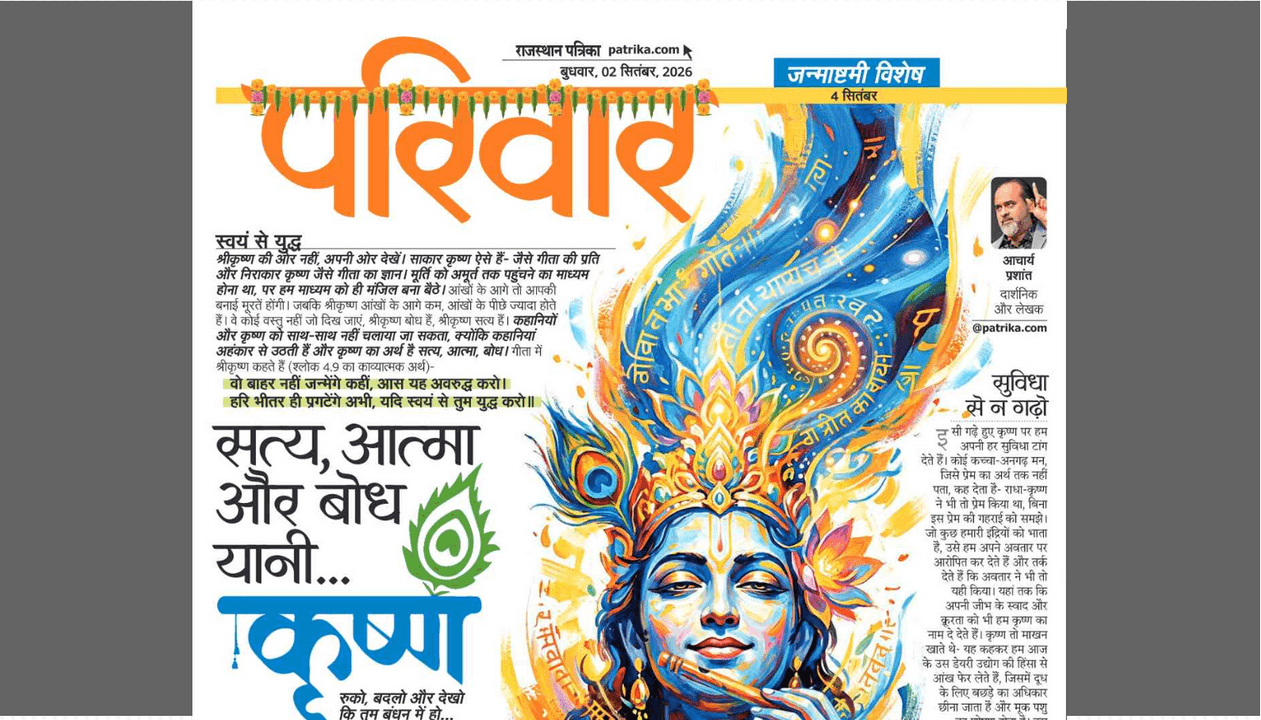
In this special Janmashtami feature published in Rajasthan Patrika, philosopher and author Acharya Prashant explains why the true Krishna is not an idol to be worshipped from a distance, but Truth, the Self, and Realization (Satya, Atma, Bodh) itself.

In this article published in The Pioneer, Acharya Ji questions the prevailing fear surrounding AI and raises a fundamental question: who is the one who is afraid, and what is he actually trying to preserve?

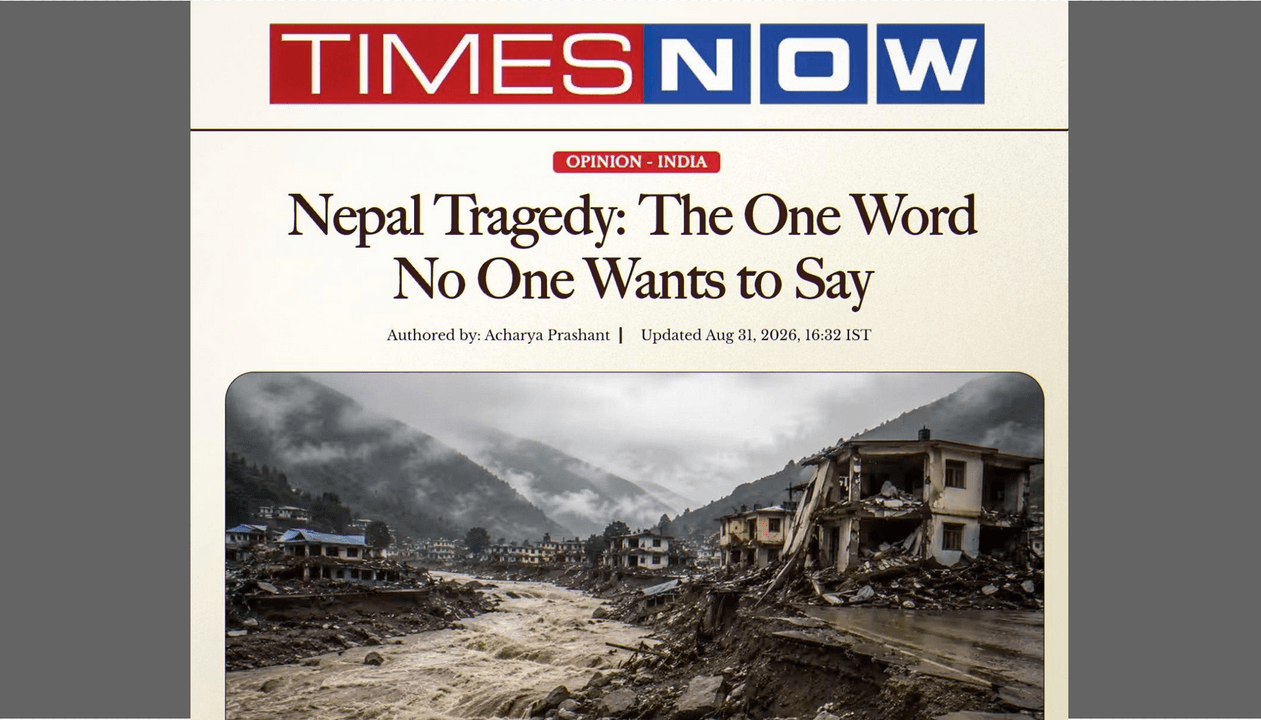
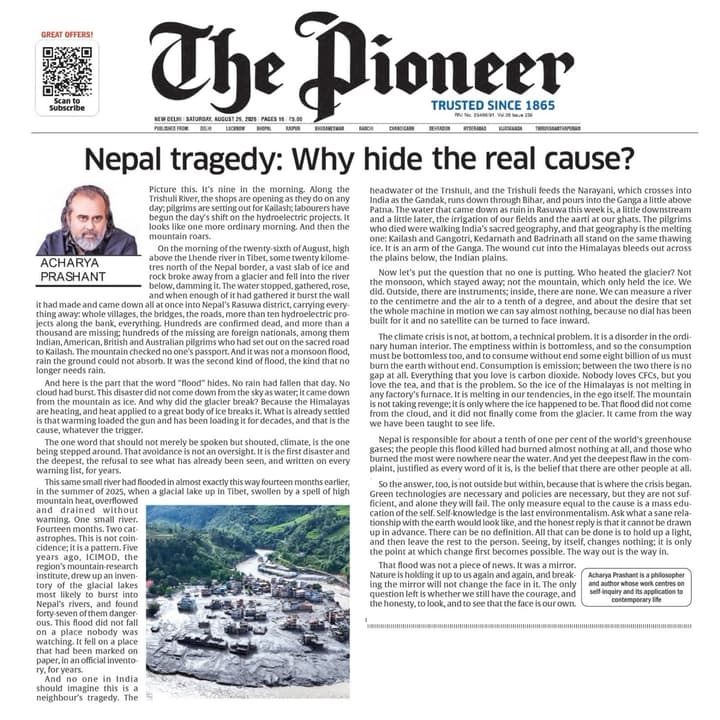
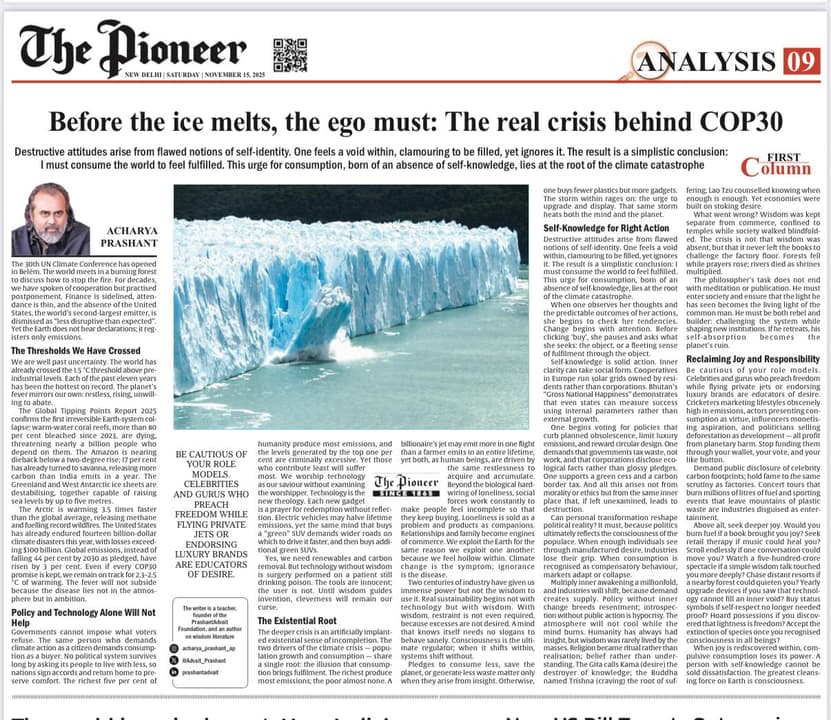
"That flood did not come from the cloud, and it did not finally come from the glacier. It came from the way we have been taught to see life. The ice of the Himalayas is not melting in any factory's furnace. It is melting in our tendencies, in the ego itself."

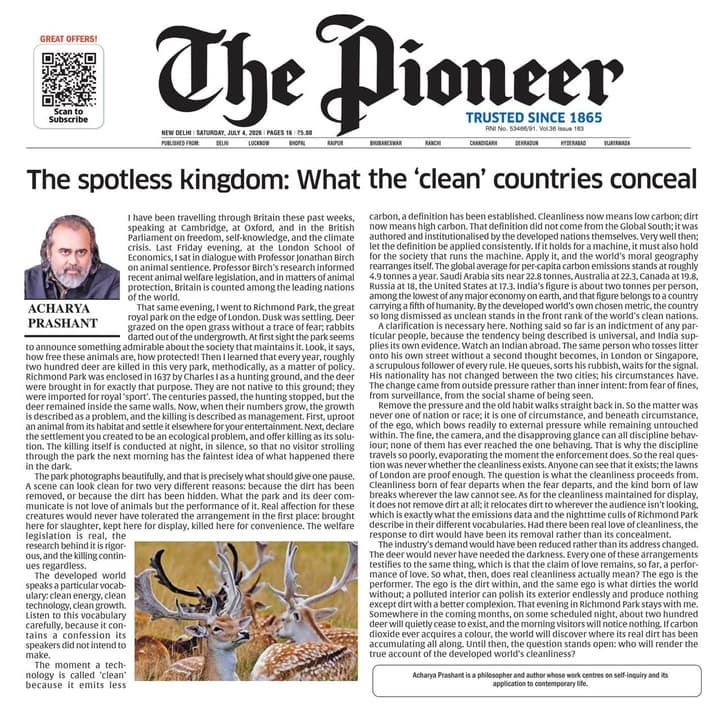
“A scene can look clean for two very different reasons: because the dirt has been removed, or because the dirt has been hidden. The whole of this article is about learning to tell those two apart, because the difference between them is the difference the developed world has spent decades refusing to examine. The question feels sharper this summer than ever, with Europe scorching under record heat and the climate crisis sitting at the centre of every serious international conversation.”

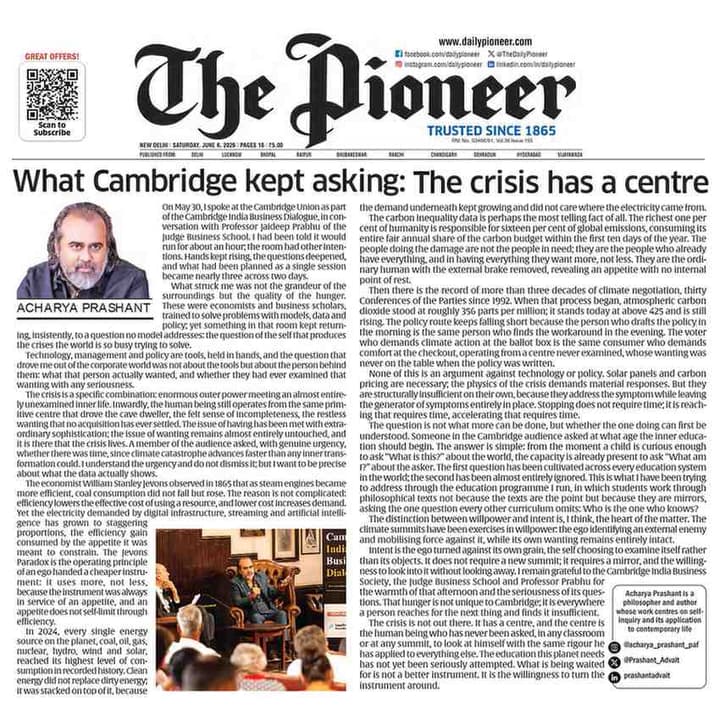
"On the 30th of May, I spoke at the Cambridge Union as part of the Cambridge India Business Dialogue, in conversation with Professor Jaideep Prabhu of the Judge Business School. I had been told the session would run for about an hour; the room had other intentions."

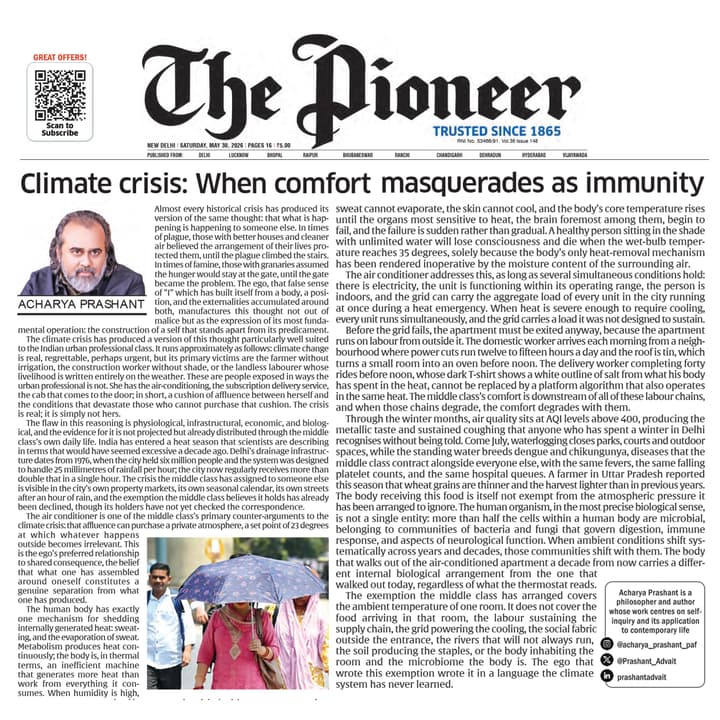
Almost every historical crisis has produced its version of the same thought: what is happening is happening to someone else. The climate crisis has produced a version of this thought particularly well-suited to the Indian urban professional class: climate change is real, but its primary victims are the farmer without irrigation, the construction worker or the landless labourer. The crisis the middle class has assigned to someone else is visible in the city's own property markets, its own seasonal calendar, its own streets after an hour of rain, and the exemption the middle class believes it holds has already been declined, though its holders have not yet checked the correspondence.

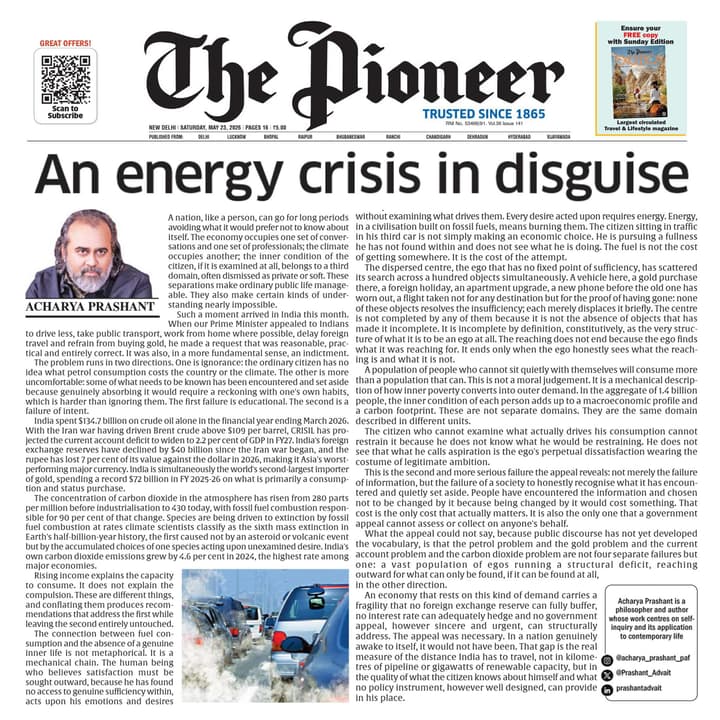
"The connection between fuel consumption and the absence of a genuine inner life is not metaphorical. It is a mechanical chain. The human being who believes that satisfaction must be sought outward, because he has found no access to genuine sufficiency within, acts upon his emotions and desires without examining what drives them. Every desire acted upon requires energy. Energy, in a civilisation built on fossil fuels, means burning them."

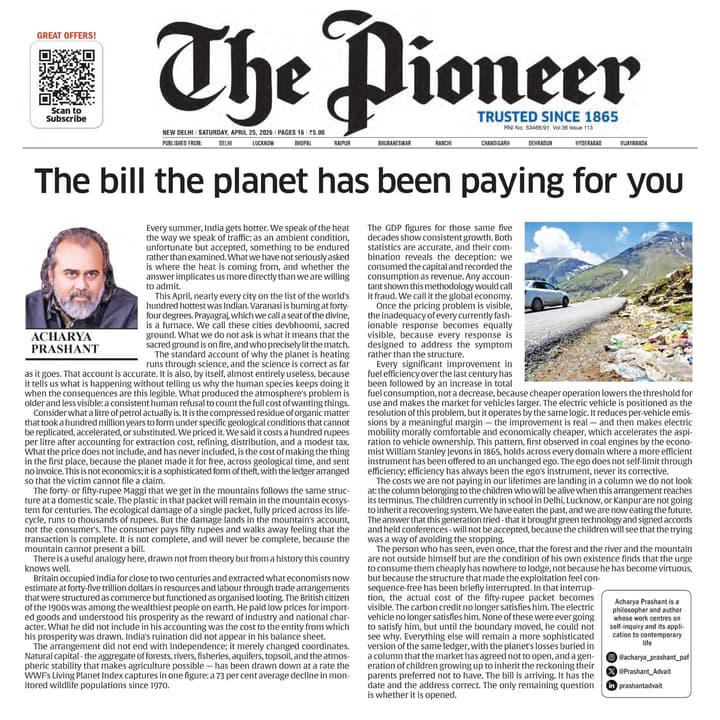
"The mountains are on fire and India's cities are furnaces. The bill for two centuries of mispriced consumption is arriving on a schedule that runs ahead of every published forecast. The question that remains is a simple one: whether the person who drove up to the hills, ate the Maggi, and tossed the packet into the ravine is willing to reckon with the distance between what he paid and what it cost."

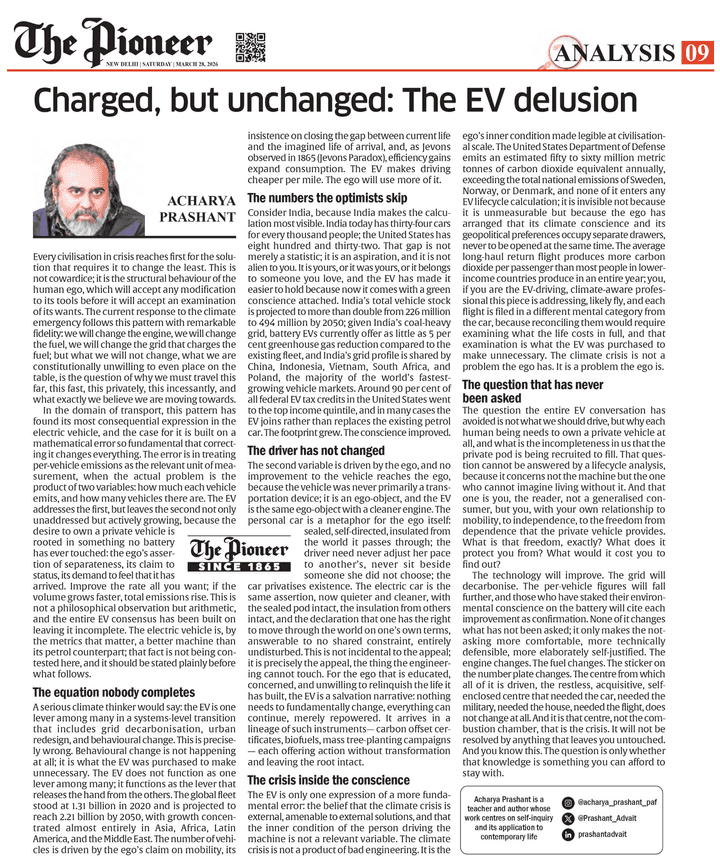
"Every civilisation in crisis reaches first for the solution that requires it to change the least. This is not cowardice; it is the structural behaviour of the human ego, which will accept any modification to its tools before it will accept an examination of its wants."

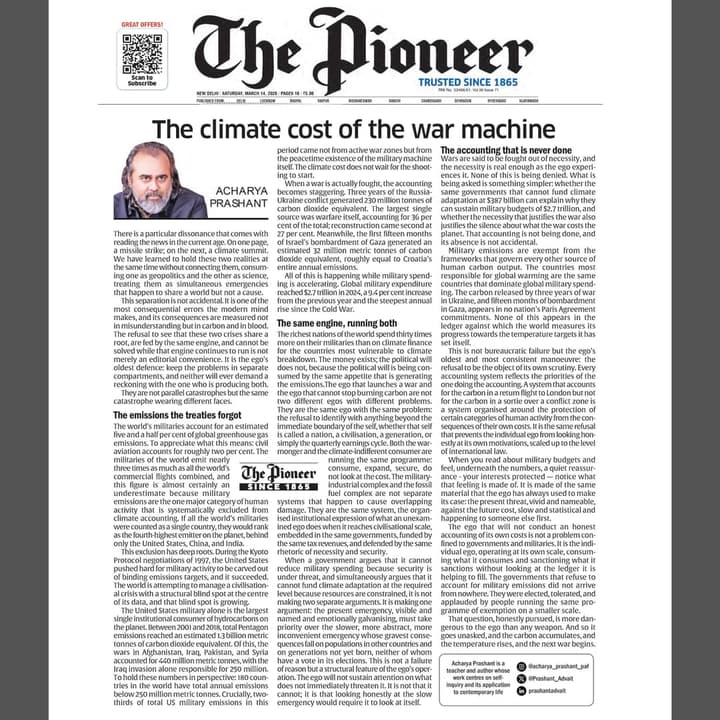
“War is not only a humanitarian disaster; it is also an environmental one. Modern warfare devours fuel, burns cities, poisons soil and air, and leaves behind scars that last far longer than the battles themselves. Even as nations pledge to fight climate change, the machinery of war continues to run on a scale that quietly undermines those very promises.”

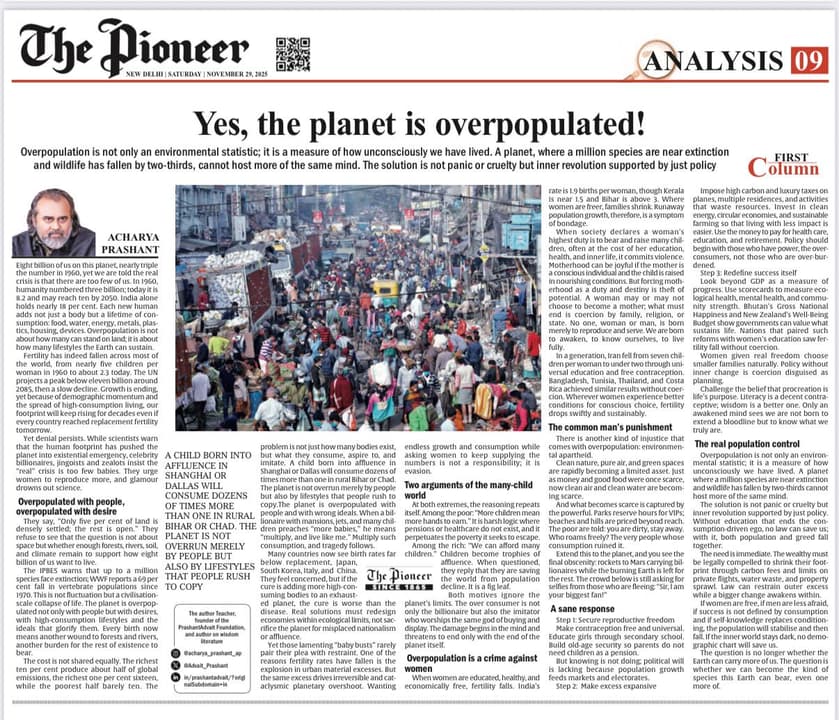
"Yes, the planet is overpopulated, but not merely with human bodies. It is overpopulated with high‑consumption lifestyles and with the ideals that glorify them. The way we are living, every additional human birth often means one more wound to the forests, the rivers, the climate, and the other species that must make space for us. When one more human is added in this prevailing culture of ignorant consumption, the rest of existence has one more burden to carry."

"Governments cannot enforce what people do not inwardly accept. The same person who demands climate action as a citizen demands consumption as a buyer. The voter and the consumer are the same person, unwilling to live with less. No political system survives long by asking its people to sacrifice comfort. So governments sign accords, issue statements, and return home to protect normalcy."

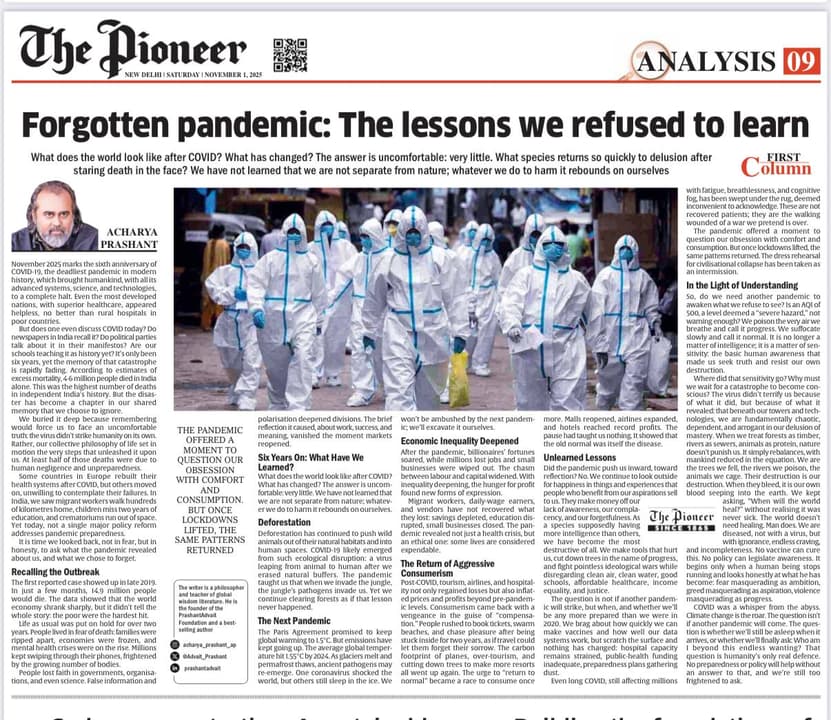
"What does the world look like after COVID? What has changed? The answer is uncomfortable: very little. What species returns so quickly to delusion after staring death in the face? We have not learned that we are not separate from nature; whatever we do to harm it rebounds on ourselves."

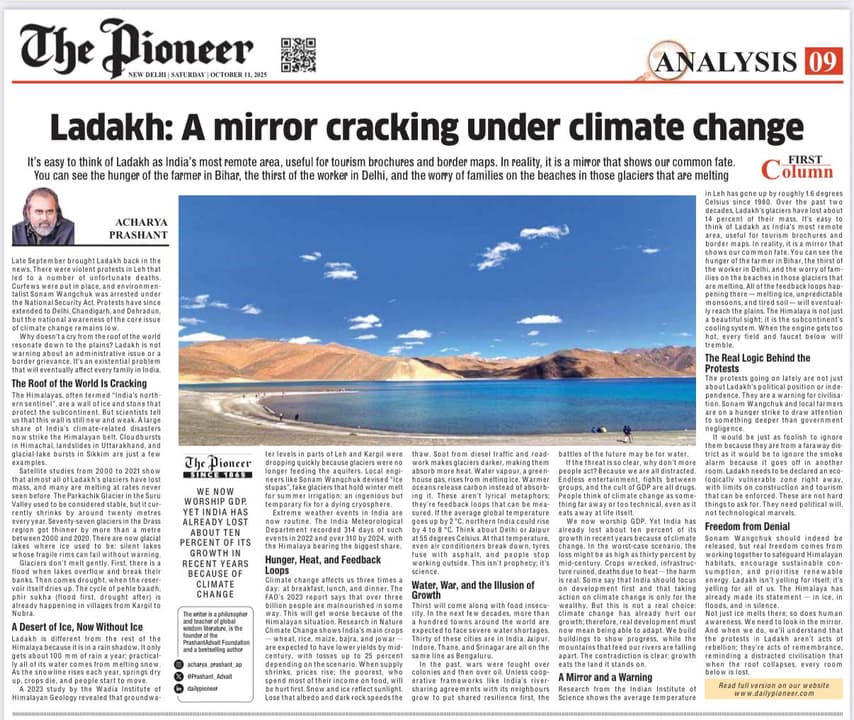
"It’s easy to think of Ladakh as India’s most remote area, useful for tourism brochures and border maps. In reality, it is a mirror that shows our common fate. You can see the hunger of the farmer in Bihar, the thirst of the worker in Delhi, and the worry of families on the beaches in those glaciers that are melting."

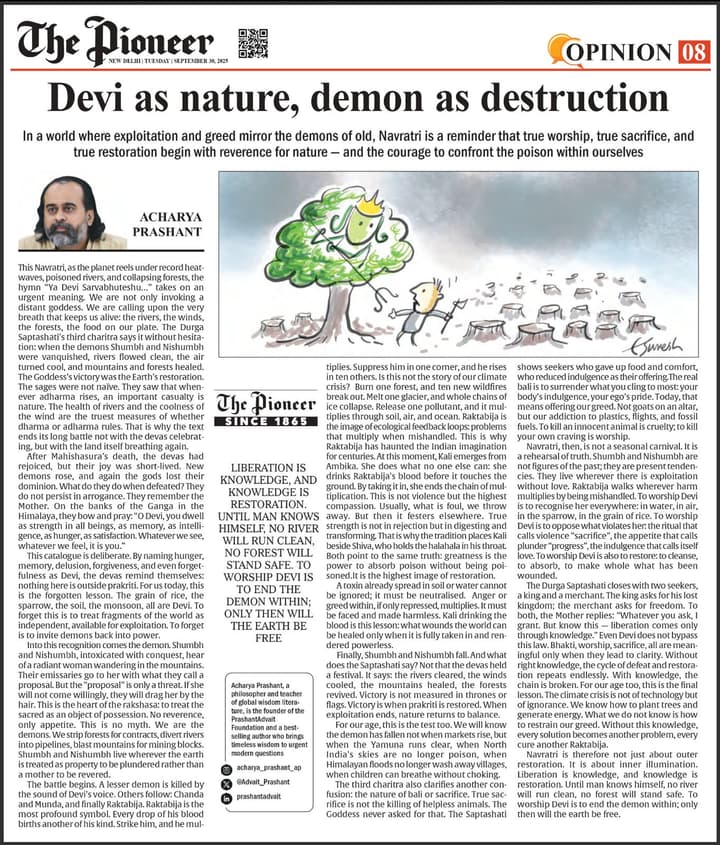
"In a world where exploitation and greed mirror the demons of old, Navratri is a reminder that true worship, true sacrifice, and true restoration begin with reverence for nature — and the courage to confront the poison within ourselves"

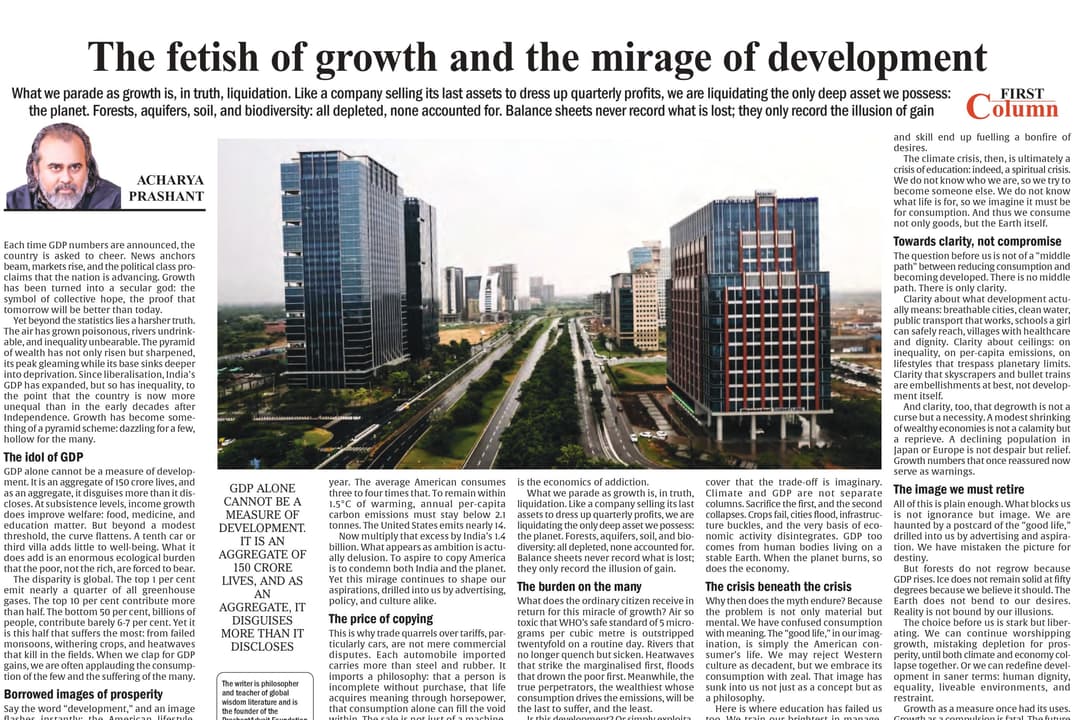
"What we parade as growth is, in truth, liquidation. Like a company selling its last assets to dress up quarterly profits, we are liquidating the only deep asset we possess: the planet. Forests, aquifers, soil, and biodiversity: all depleted, none accounted for."

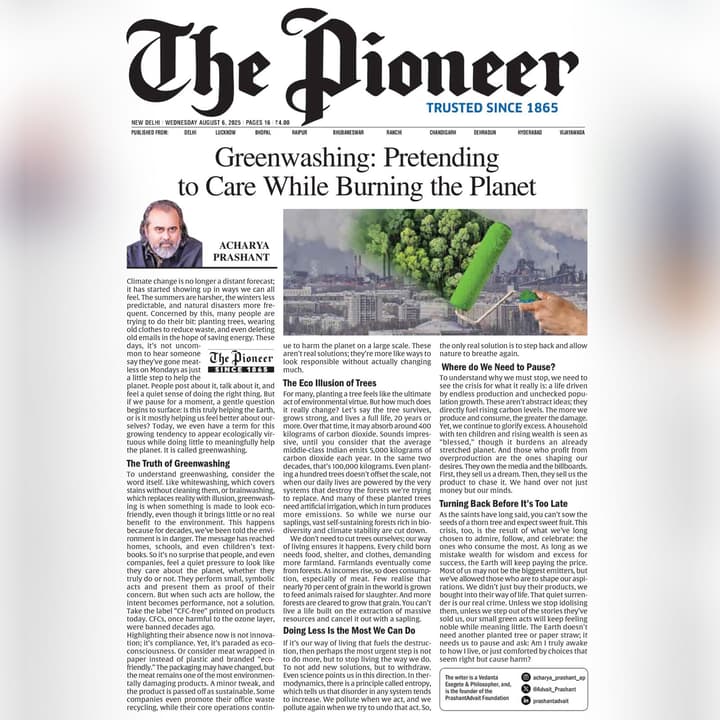
"Somewhere along the way, being ‘green’ became a way to signal that you’re thoughtful and responsible. So it’s no surprise that people, and even companies, feel a quiet pressure to look like they care about the planet, whether they truly do or not."

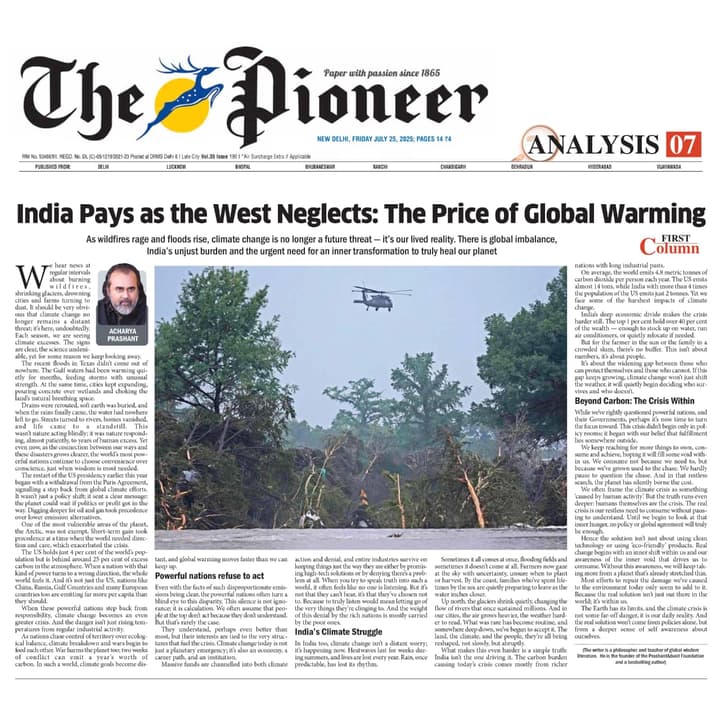
"Even with the facts of such disproportionate emissions being clear, the powerful nations often turn a blind eye to this disparity. This silence is not ignorance; it is calculation. We often assume that people at the top don’t act because they don’t understand. But that’s rarely the case. They understand, perhaps even better than most, but their interests are tied to the very structures that fuel the crisis."

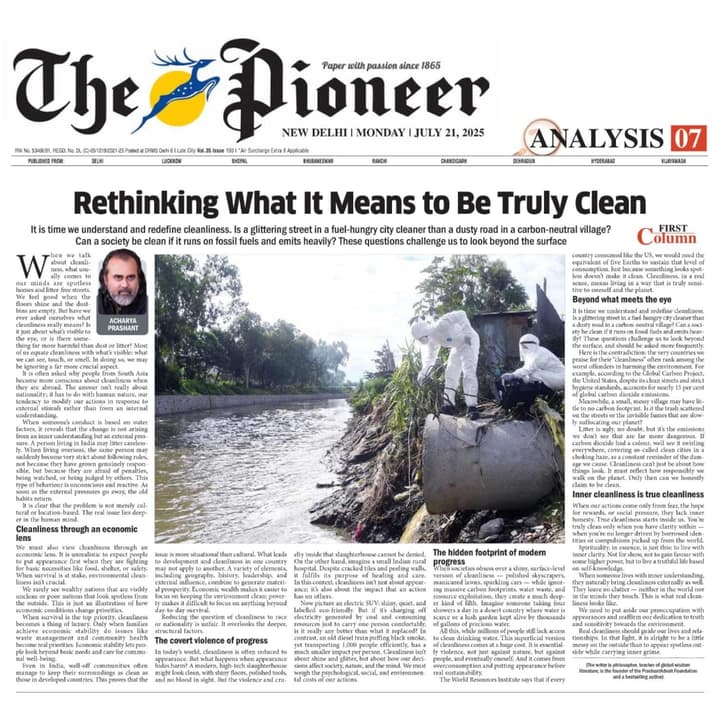
"It is time we understand and redefine cleanliness. Is a glittering street in a city that burns fuel cleaner than a dusty road in a carbon-neutral village? Can a society be clean if it runs on fossil fuels and emits heavily? These questions challenge us to look beyond the surface, and should be asked more frequently."

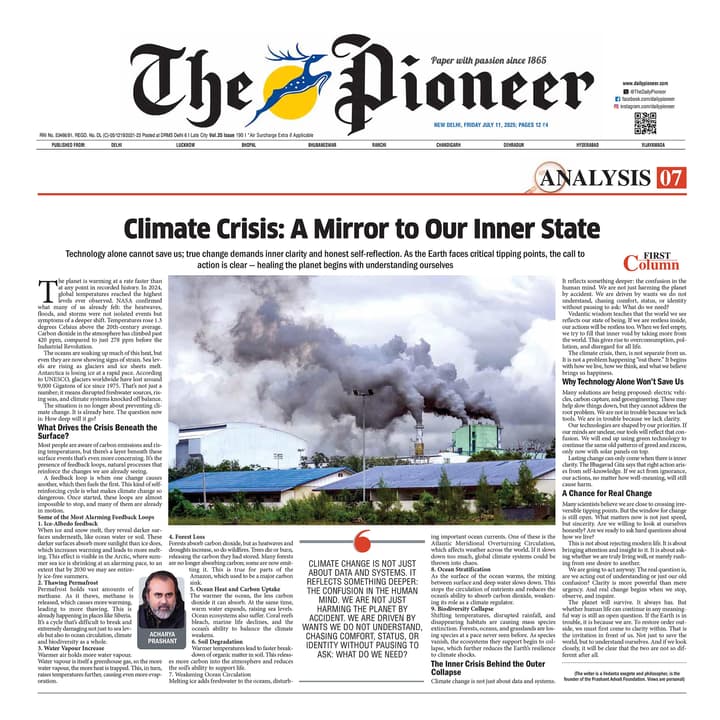
"Climate change is not just about data and systems. It reflects something deeper: the confusion in the human mind. We are not just harming the planet by accident. We are driven by wants we do not understand, chasing comfort, status, or identity without pausing to ask: What do we really need?"

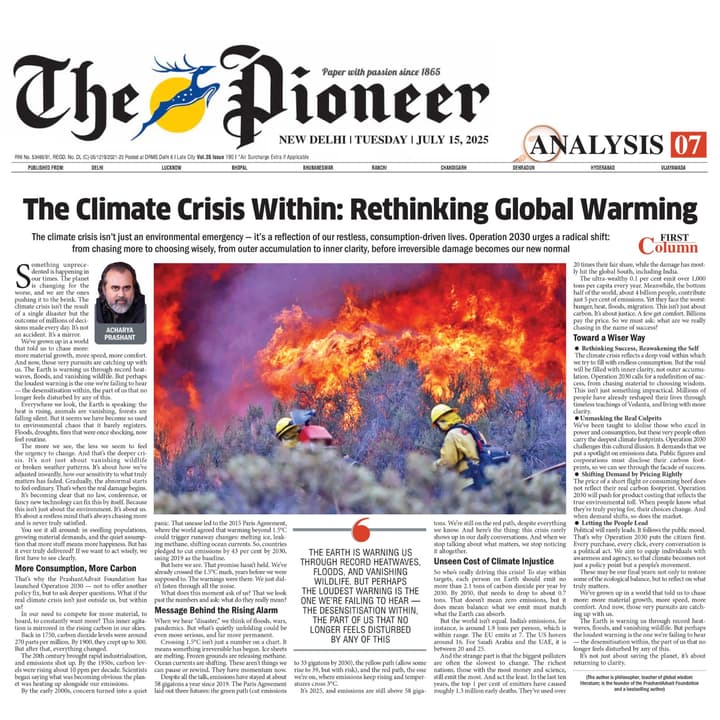
"The climate crisis isn’t just an environmental emergency — it’s a reflection of our restless, consumption-driven lives. Operation 2030 urges a radical shift: from chasing more to choosing wisely, from outer accumulation to inner clarity, before irreversible damage becomes our new normal."

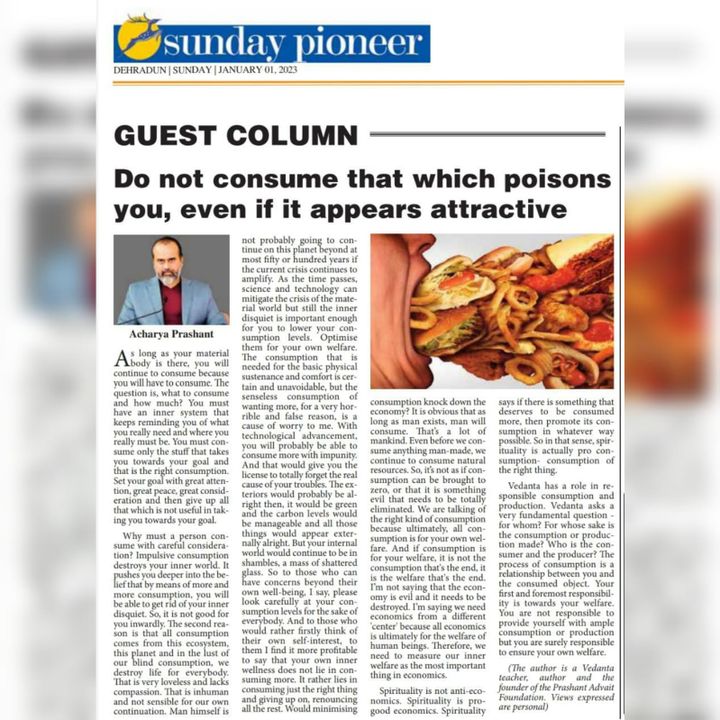
Delve into Acharya Prashant's illuminating perspective on consumption and inner peace in The Pioneer. As a renowned Vedanta teacher, he advocates for mindful consumption, urging readers to align their consumption habits with personal well-being and environmental sustainability.