Media Coverage of Acharya Prashant
HIGHLIGHTS
Coverage of his work in the national and international press: his gatherings, dialogues, recognitions, and milestones.
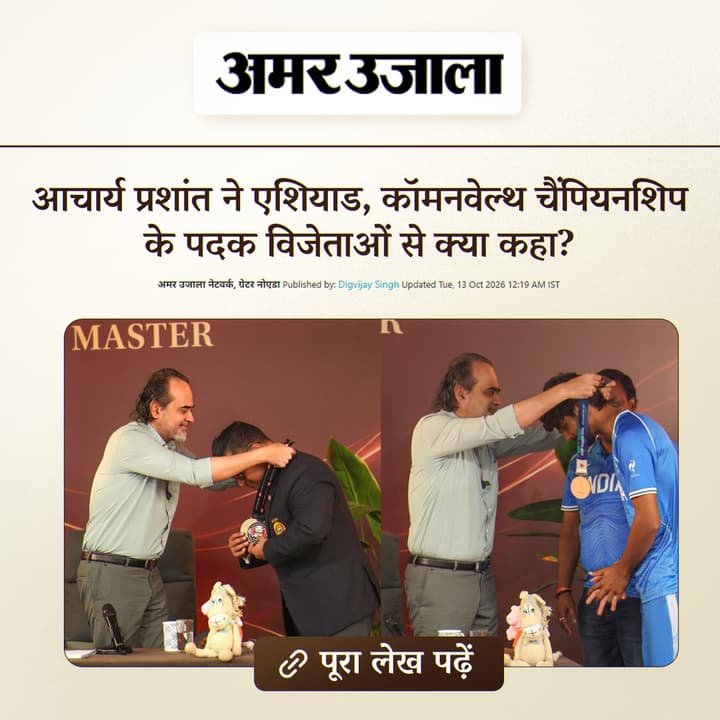
Amar Ujala13 Oct '26
Acharya Prashant to Medal Winners: Don’t Tie Your Identity to Winning or Losing
At the ‘Sant Sarita’ session held at the IIMT Ladder Business Foundation, Acharya Prashant advised athletes to look beyond worrying about results and focus on their game and effort. Jay Meena of Dewas made history on 23 September by winning the bronze medal in men’s singles soft tennis at the Aichi-Nagoya Asian Games.
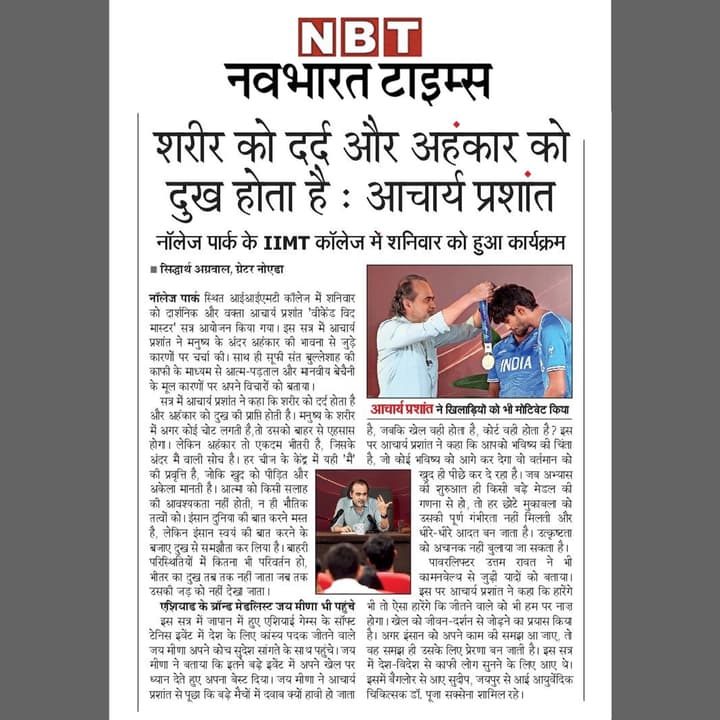
NBT Navbharat Times13 Oct '26
The Body Feels Pain, the Ego Feels Sorrow: Acharya Prashant
A ‘Weekend with Master’ session with the philosopher and author of the AP Framework, Acharya Prashant, was held on Saturday in Knowledge Park. Jay Meena, who won the bronze medal for the country in the soft tennis event at the Asian Games held in Japan, attended the session with his coach Sudesh Sangte.
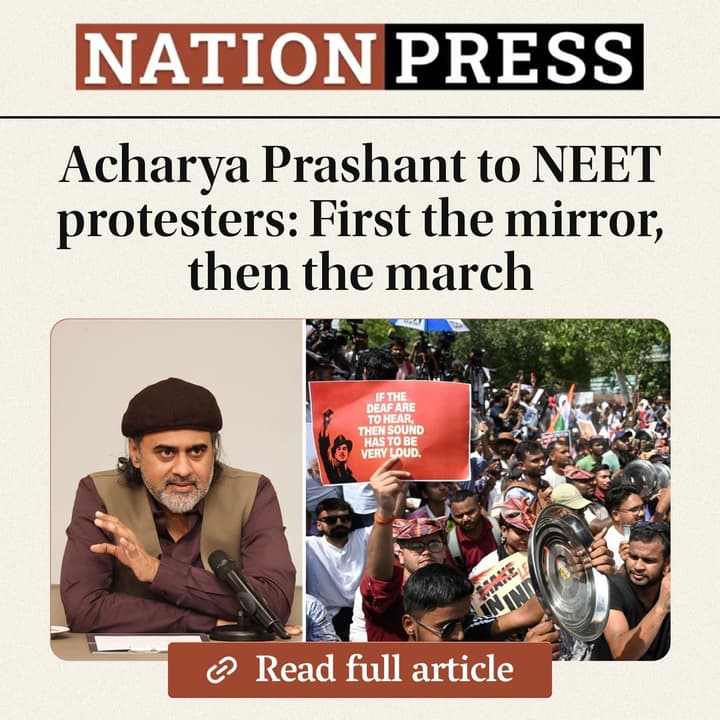
Nation Press24 Jul '26
'Dear Youth, How About a Real Revolution?: Acharya Prashant's Message to a Protesting Generation'
"Acharya Prashant has shared a message for the youth protesting the NEET paper leak. The demand for action, he said, has been raised so loud that the protester himself is never examined. He said that he has no problem with the street, only with the blindness on it. The movement is not wrong, but its sequence has been inverted. He clarified that he was not asking for the protest to be stopped, but proposing a fitness test."
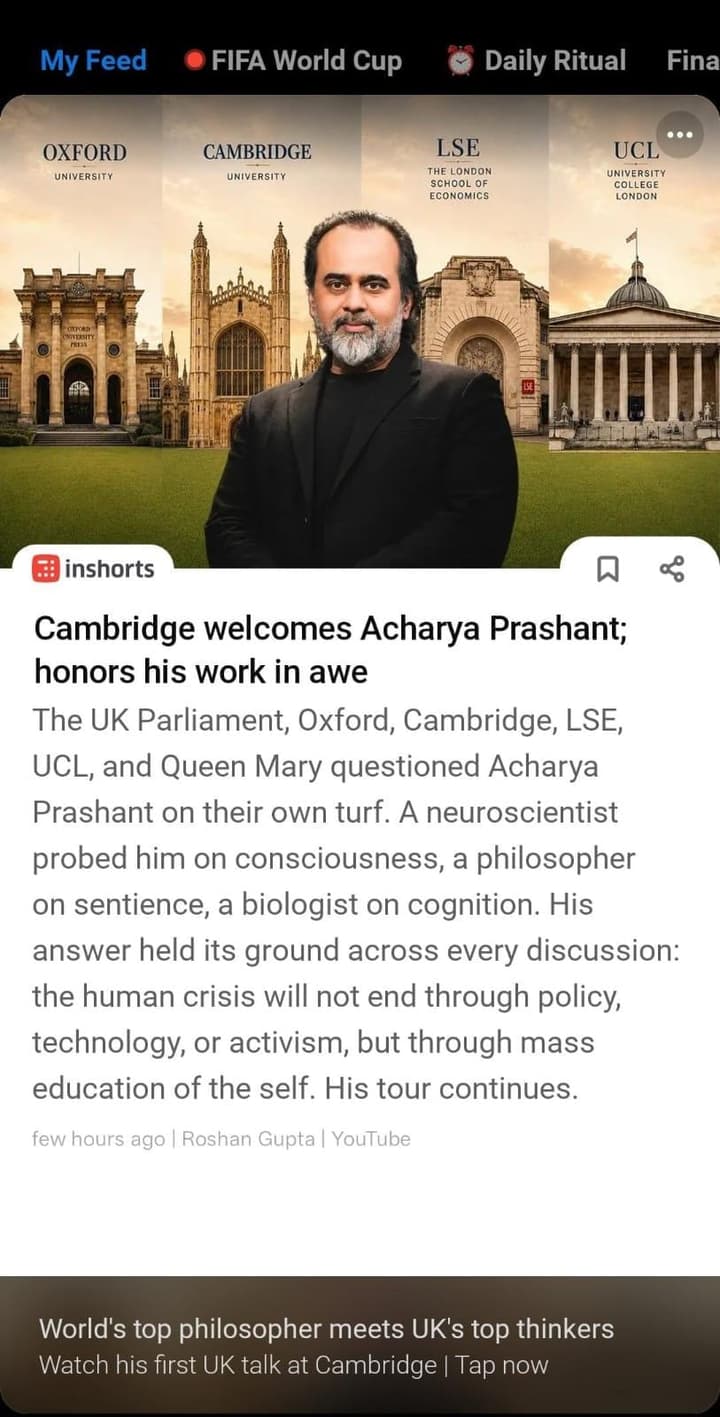
inshorts19 Jul '26
Acharya Prashant's Britain Tour and Cambridge University Video
Acharya Prashant's Britain Tour and Cambridge University Video Britain Tour and Cambridge University Video of Acharya Prashant. Now covered in Inshorts!
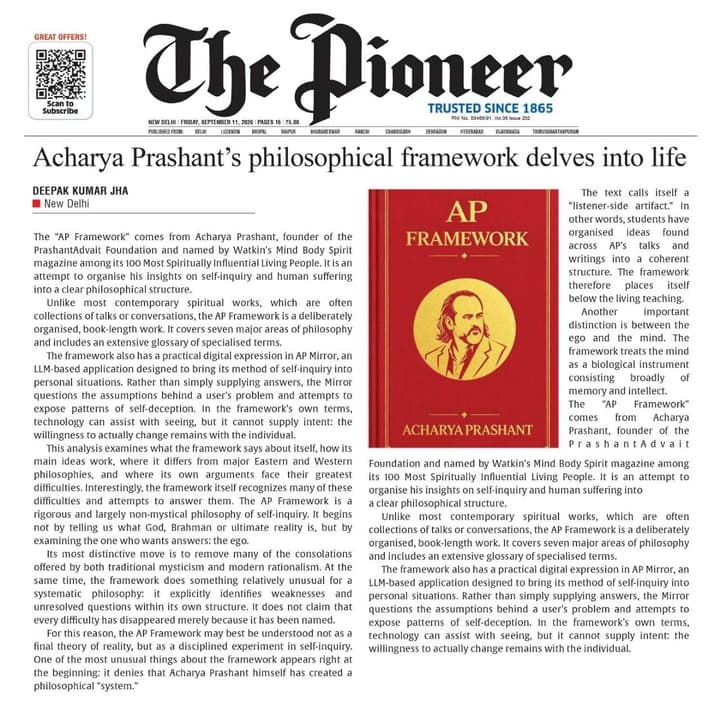
The Pioneer11 Sep '26
Problems are horizontal, freedom is vertical: Acharya Prashant’s philosophical framework delves into life with illustrations
"Unlike most contemporary spiritual works, which are often collections of talks or conversations, the AP Framework is a deliberately organised, book-length work. It covers seven major areas of philosophy and includes an extensive glossary of specialised terms. It has also been published as a physical volume, The AP Framework. The framework also has a practical digital expression in AP Mirror, an LLM-based application designed to bring its method of self-inquiry into personal situations."
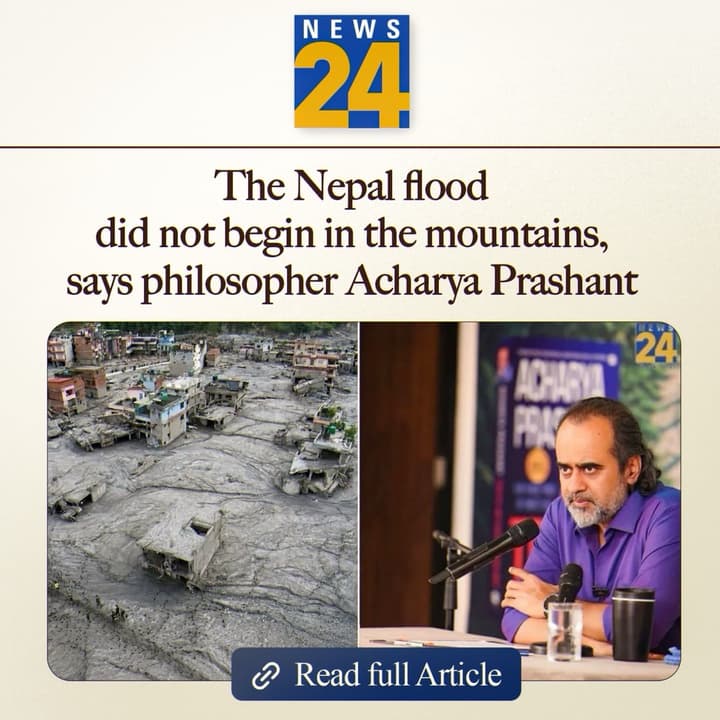
The Asian Independent01 Sep '26
The Nepal flood did not begin in the mountains, says philosopher Acharya Prashant
"The flood that tore through Nepal’s Rasuwa district did not begin in the mountains, philosopher and author Acharya Prashant has said. It began, in his account, in the restless human desire that treats the earth as fuel for itself. Asked why climate change was conspicuously missing from the news coverage of this tragedy, he said the word was kept out because naming it would implicate everyone who lives an ordinary consuming life. “Every emitter is responsible for these deaths,” he said."
The Hindu21 Jun '25
Acharya Prashant’s Yoga Day message from PVR-INOX featured in The Hindu!
"Yoga is not relief, but revolution. It begins where your excuses end. You cannot be in yoga and continue to live as you were"
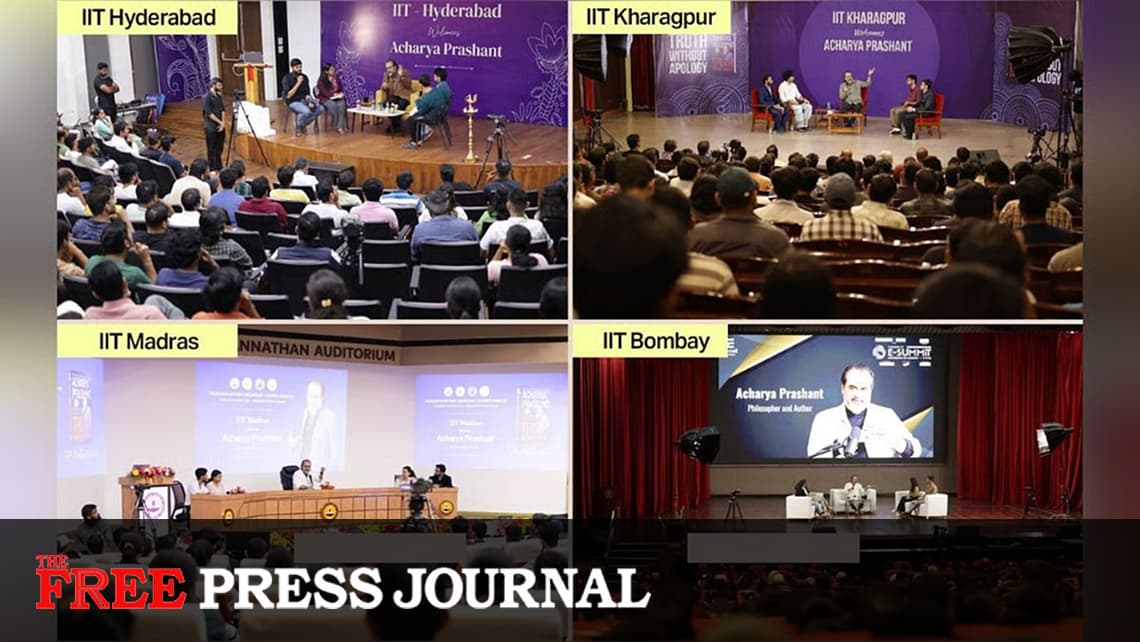
Free Press Journal31 Dec '25
Acharya Prashant Addresses Four IITs in Two Months
"Philosophy sessions in engineering campuses are not new. What is new is a 1500 seater auditorium overflowing thirty minutes before start time, students sitting on staircases, and interactions stretching to seven hours because nobody wants to leave."
- ARTICLES
- PUBLICATIONS











FOR THE PRESS
Cover Acharya Prashant's Work.
If you are here, you already know what his presence means for a story.Editorial requests (interviews, event coverage, review copies) are handled by the PR desk. Reach out directly.
CONTACT
Media & PR Desk
PHONE
EMAIL


