Coverage of his work in the national and international press: his gatherings, dialogues, recognitions, and milestones.
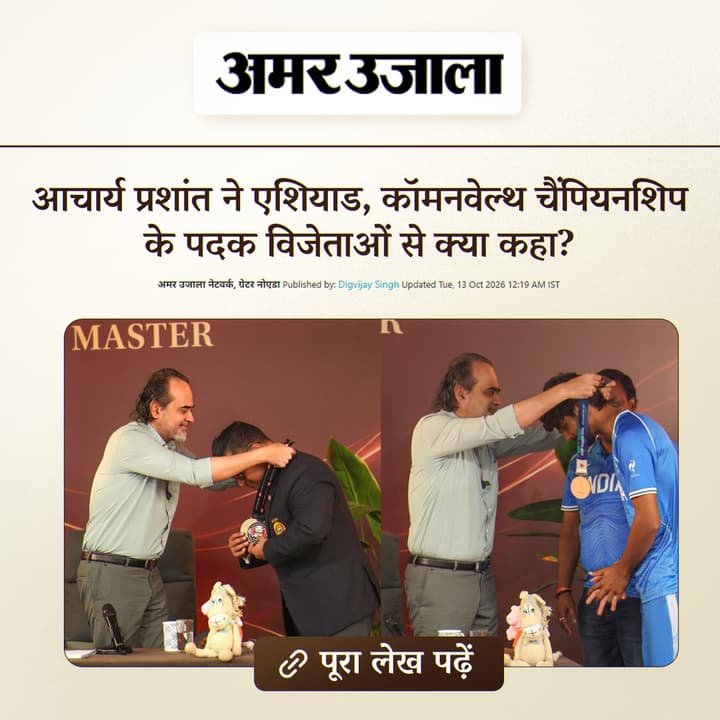
At the ‘Sant Sarita’ session held at the IIMT Ladder Business Foundation, Acharya Prashant advised athletes to look beyond worrying about results and focus on their game and effort. Jay Meena of Dewas made history on 23 September by winning the bronze medal in men’s singles soft tennis at the Aichi-Nagoya Asian Games.
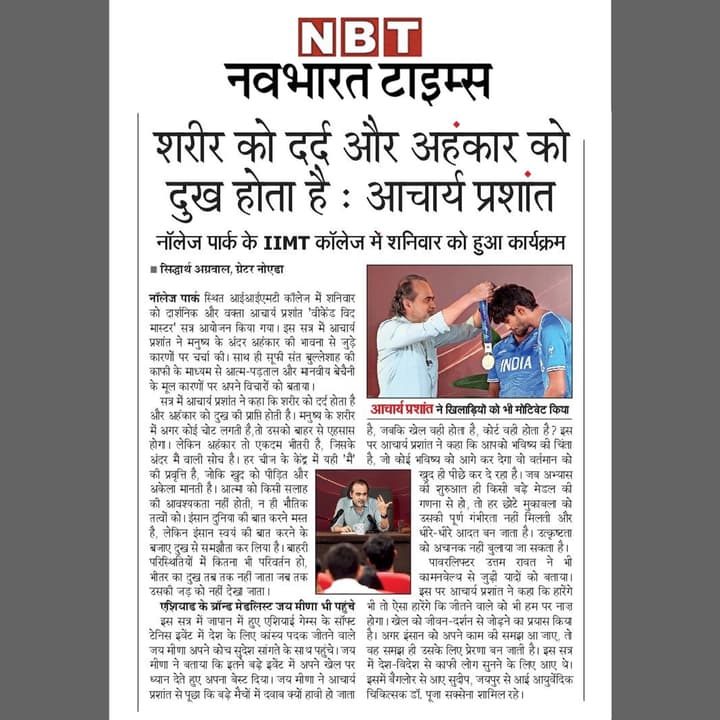
A ‘Weekend with Master’ session with the philosopher and author of the AP Framework, Acharya Prashant, was held on Saturday in Knowledge Park. Jay Meena, who won the bronze medal for the country in the soft tennis event at the Asian Games held in Japan, attended the session with his coach Sudesh Sangte.

"Acharya Prashant has shared a message for the youth protesting the NEET paper leak. The demand for action, he said, has been raised so loud that the protester himself is never examined. He said that he has no problem with the street, only with the blindness on it. The movement is not wrong, but its sequence has been inverted. He clarified that he was not asking for the protest to be stopped, but proposing a fitness test."
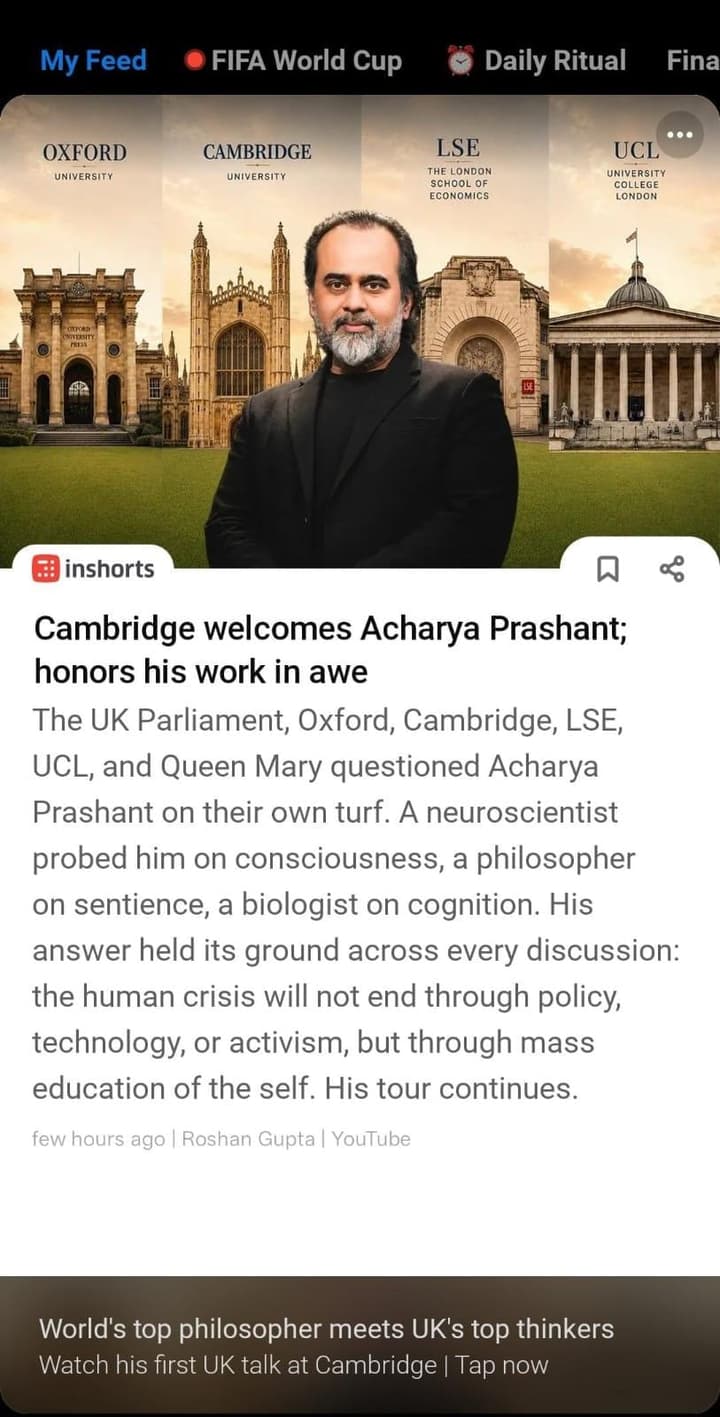
Acharya Prashant's Britain Tour and Cambridge University Video Britain Tour and Cambridge University Video of Acharya Prashant. Now covered in Inshorts!
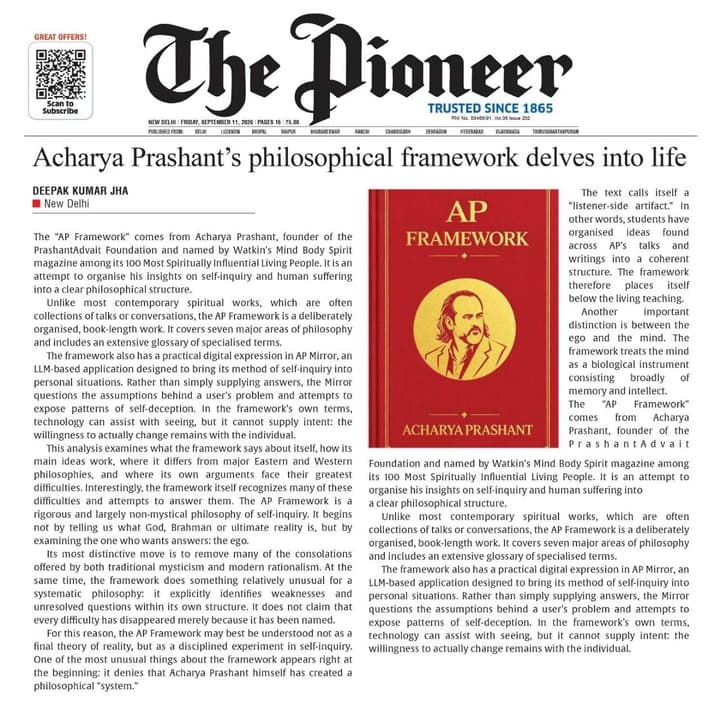
"Unlike most contemporary spiritual works, which are often collections of talks or conversations, the AP Framework is a deliberately organised, book-length work. It covers seven major areas of philosophy and includes an extensive glossary of specialised terms. It has also been published as a physical volume, The AP Framework. The framework also has a practical digital expression in AP Mirror, an LLM-based application designed to bring its method of self-inquiry into personal situations."
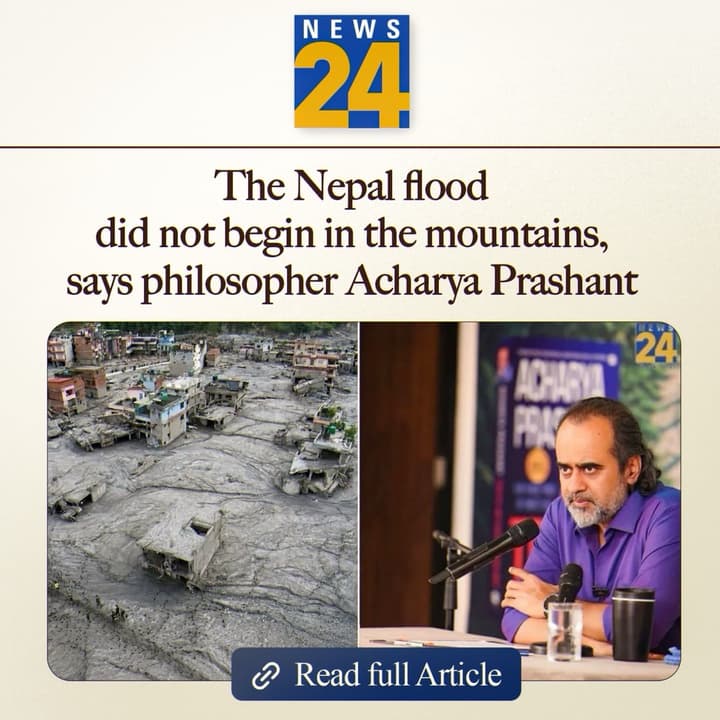
"The flood that tore through Nepal’s Rasuwa district did not begin in the mountains, philosopher and author Acharya Prashant has said. It began, in his account, in the restless human desire that treats the earth as fuel for itself. Asked why climate change was conspicuously missing from the news coverage of this tragedy, he said the word was kept out because naming it would implicate everyone who lives an ordinary consuming life. “Every emitter is responsible for these deaths,” he said."
"Yoga is not relief, but revolution. It begins where your excuses end. You cannot be in yoga and continue to live as you were"
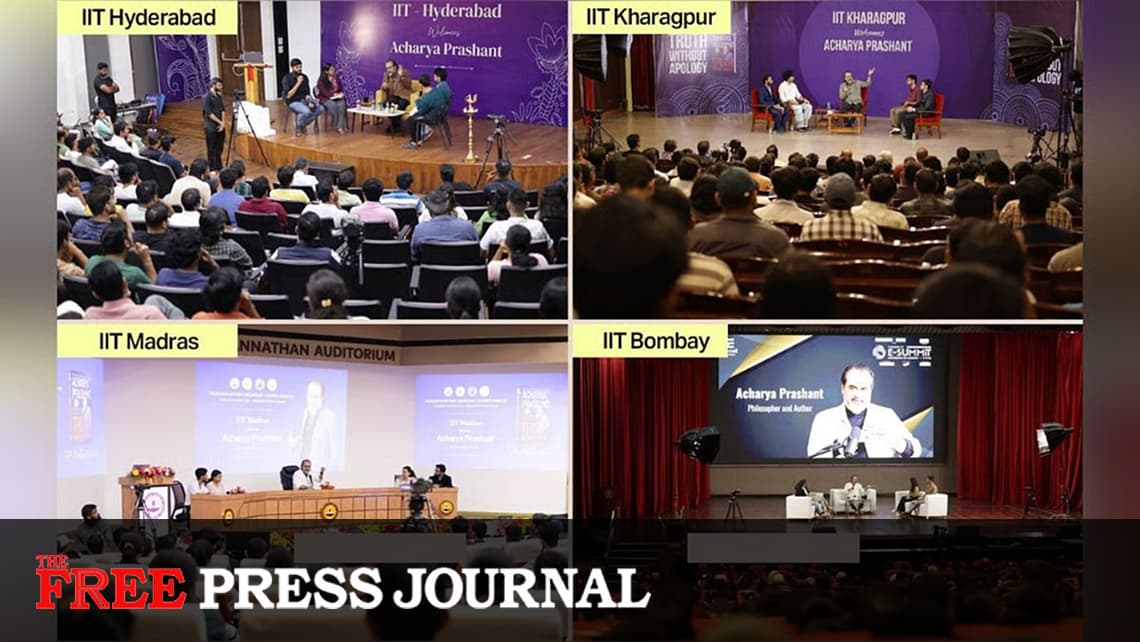
"Philosophy sessions in engineering campuses are not new. What is new is a 1500 seater auditorium overflowing thirty minutes before start time, students sitting on staircases, and interactions stretching to seven hours because nobody wants to leave."
FOR THE PRESS

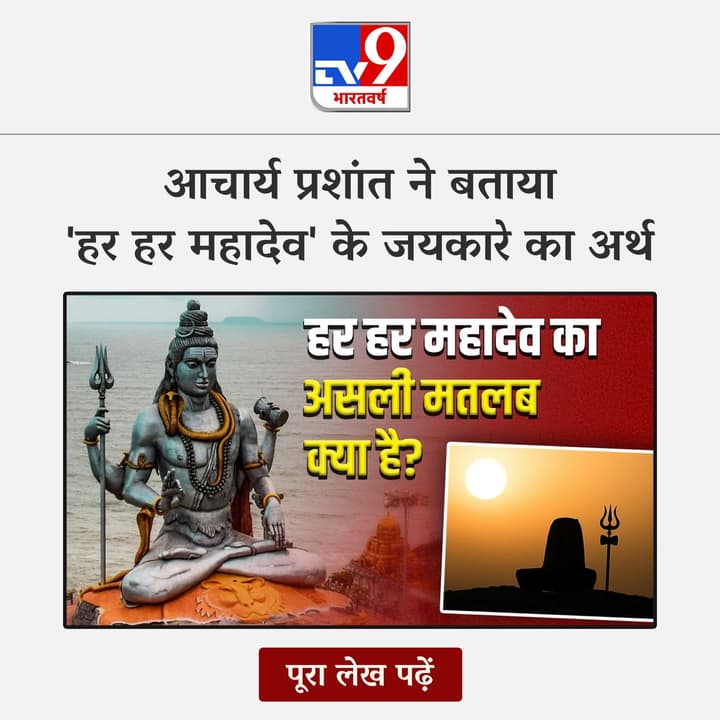
The chant "Har Har Mahadev" is often heard echoing during religious festivals and pilgrimages. But are the millions of people who chant this slogan aware of its true meaning and seriousness? Acharya Prashant shared his thoughts on this topic in a video.

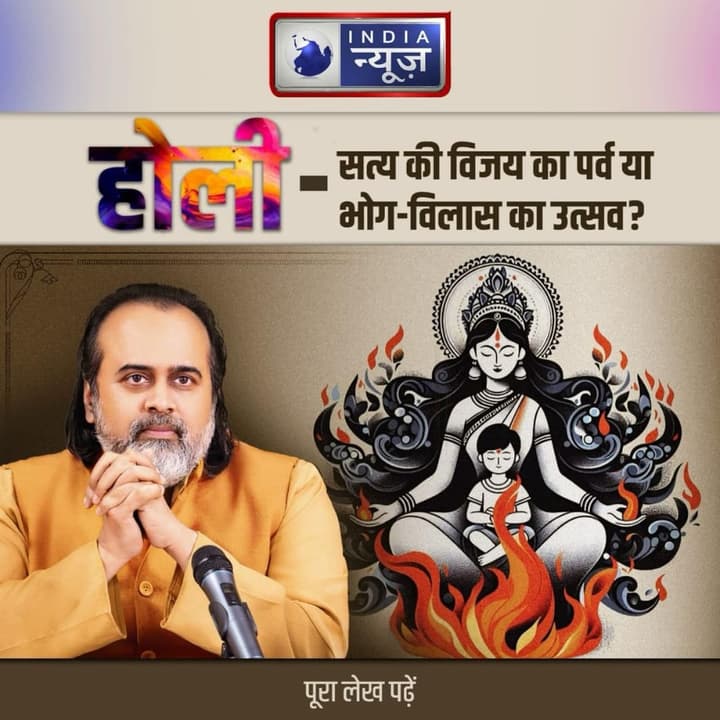
Acharya Prashant pointed out that Prahlad is no political insurgent. He represents that clean, inner refusal that says: 'No. No matter how mighty the lie, I shall not side with it.' This is all the more poignant because Hiranyakashipu is not just a ruler, but a father. This means the legend of Holi teaches us that no bond is greater than Truth, and no power is superior to Truth.

"One rarely asks the deeper question: if Holika is burned every year, why is she not finished? If she burned once, why does she return, reliably, year after year, as though the fire had touched only the wood and never reached the principle she represents? The answer is hidden in the story we think we know but may never have truly read."

Acharya Prashant, who attended a program organized at GBU, said that Mahashivratri is not just a festival of rituals, but it inspires humans to look within themselves.

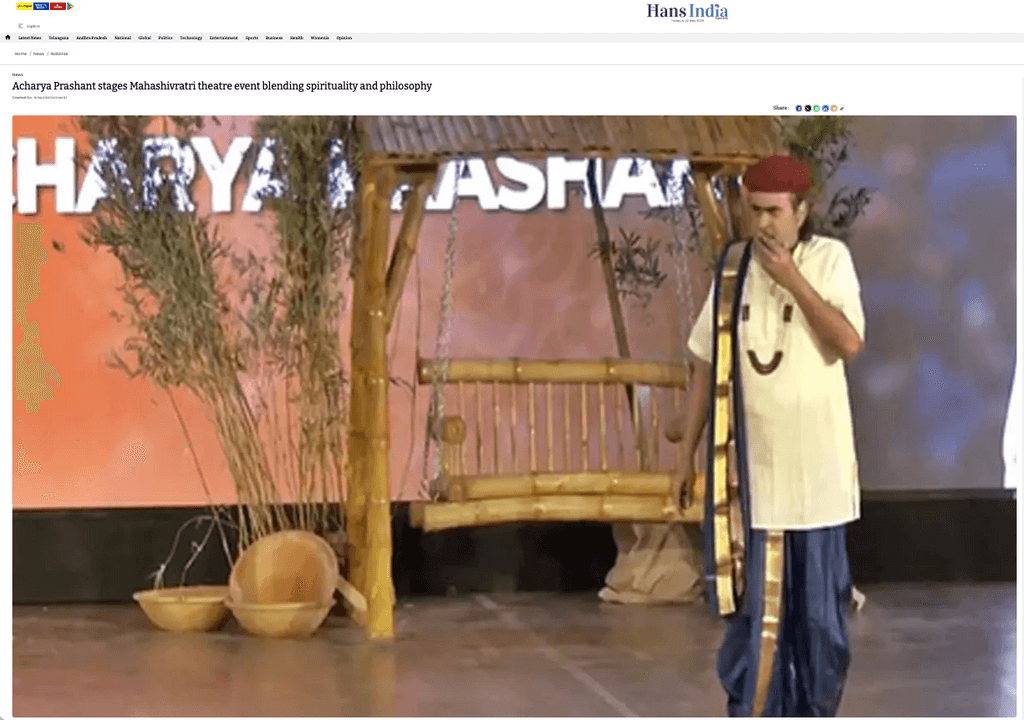
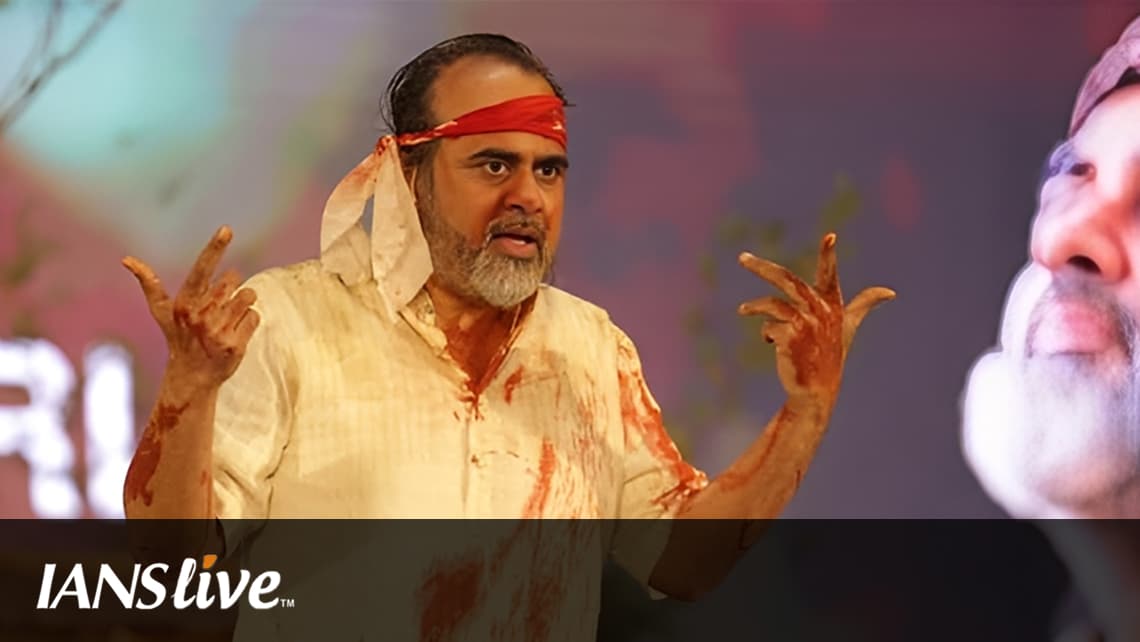
On the occasion of Mahashivratri, philosopher and author Acharya Prashant presented a special theatrical performance that masterfully blended profound knowledge, artistic expression, and deep spirituality.

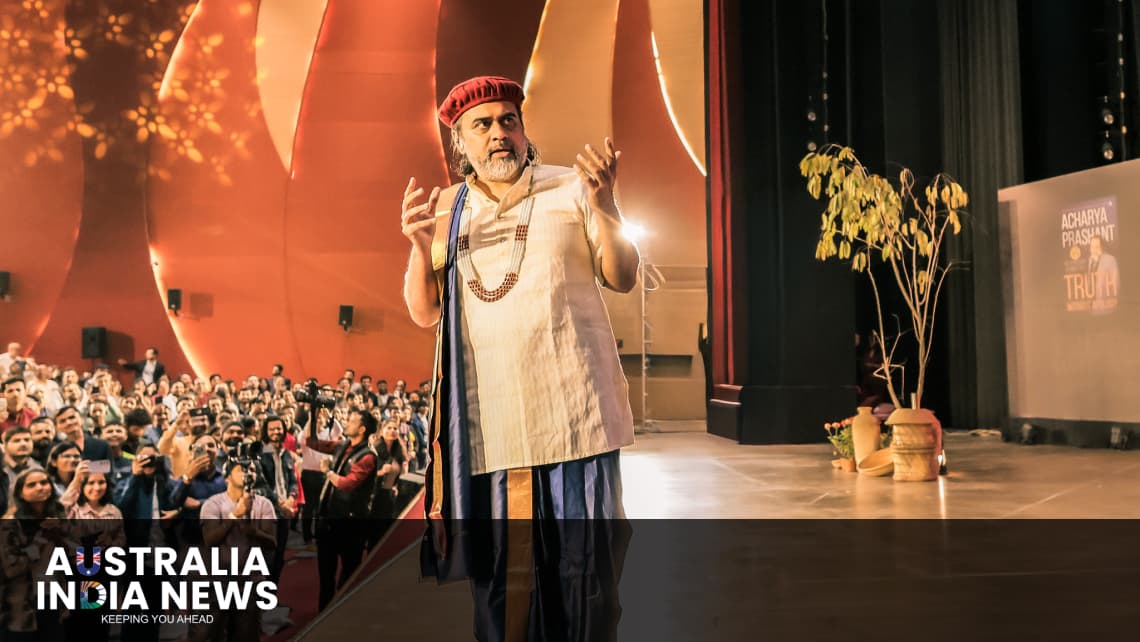
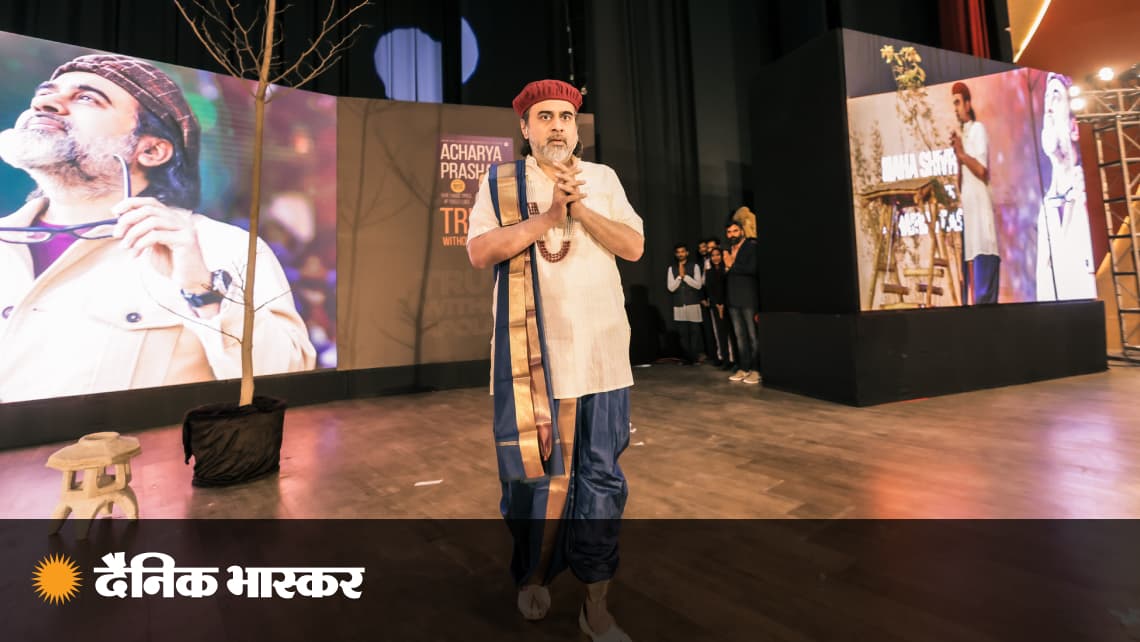
"On the eve of Mahashivratri, the grand auditorium of Gautam Buddha University was packed to capacity. Hundreds of people sat on the floor when chairs ran out. Thousands who had arrived from across India and abroad witnessed a new side of Acharya Prashant — that of an accomplished actor."

“On the occasion of Mahashivratri, philosopher and author Acharya Prashant presented a special theatrical performance that masterfully blended profound knowledge, artistic expression, and deep spirituality.”

“On Mahashivratri, philosopher and author Acharya Prashant brought something new and profound for us. He delivered a special theatrical performance. In this presentation, his fondness for art and his dedication to knowledge were visible simultaneously.”

Ahead of the 77th Republic Day, Acharya Prashant delivered a profound message stating that inner awakening is far more important than external frameworks. The true essence of a republic is realized only when citizens liberate their own inner minds.

"External lamps will eventually blow out, but if the inner lamp is lit, it will guide your path for a lifetime. Therefore, before celebrating Diwali this time, stop for a moment and look within: is there still any darkness left inside? If yes, then ignite that very spot, burst those inner illusions—that will be your true Diwali."

"The choice of multiplexes as venues became a story in itself. Spaces usually associated with films and entertainment turned, for a day, into quiet halls of reflection."

Independence Day is not just a date, but the day when India broke free from the shackles of foreign rule and took control of its own future. This day reminds us of the sacrifices of the freedom fighters who gave us this freedom.

"Acharya Prashant speech on Guru Purnima 2025: On the auspicious occasion of Guru Purnima 2025, a special address by the eminent spiritual thinker Acharya Prashant will be broadcast live across the country. The event will commence from Goa on July 10 at 7:30 PM and will be screened in over 30 cities across multiplex channels like PVR and INOX."

On the occasion of International Day of Yoga, spiritual teacher and philosopher Acharya Prashant received widespread acclaim across the country for his transformative discourse titled "Yoga in the Light of the Bhagavad Gita."

"अंतरराष्ट्रीय योग दिवस पर आचार्य प्रशांत ने किया योग के वास्तविक स्वरूप का पुनर्स्थापन; देश भर के 40 से अधिक पीवीआर-आईएनओएक्स सिनेमाघरों में गीता सत्र का सीधा प्रसारण!"

"While addressing the audience at PVR-INOX in Goa on the topic 'Yoga in the Light of the Bhagavad Gita', he stated that yoga is not a means of relief, but a call to revolution. The event, jointly organised by the PrashantAdvait Foundation and PVR-INOX, was simultaneously broadcast in over 40 cinemas across India — from Mumbai and Gurgaon to Patna and Bhopal. His bold message: 'Yoga is not a set of postures. It is a state of poise. It’s not a technique, it is truth lived.' "

"Yoga is not relief, but revolution. It begins where your excuses end. You cannot be in yoga and continue to live as you were"

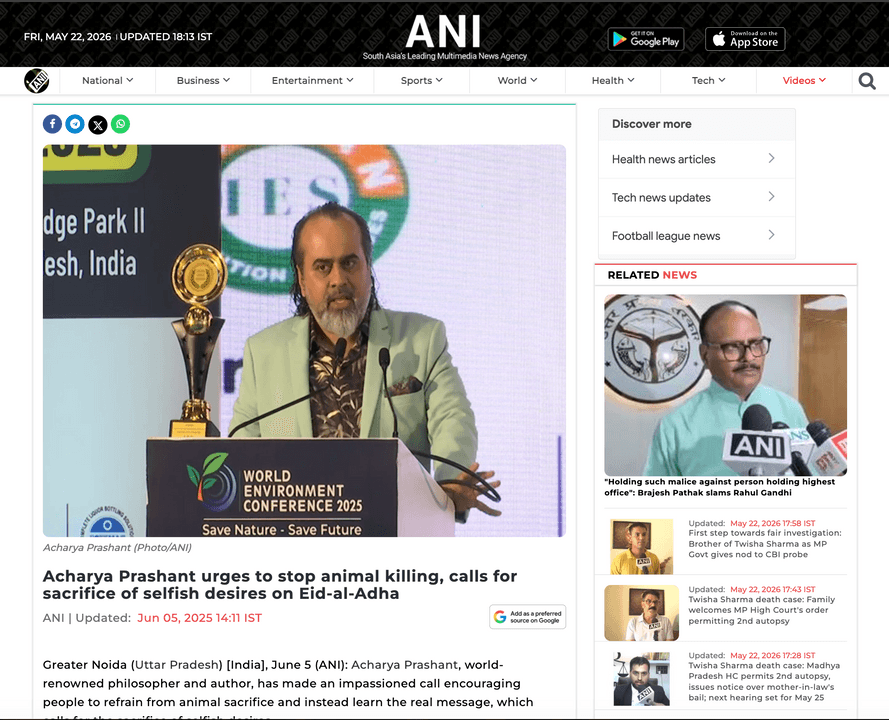
Acharya Prashant, world-renowned philosopher and author, has made an impassioned call encouraging people to refrain from animal sacrifice and instead learn the real message, which calls for the sacrifice of selfish desires.

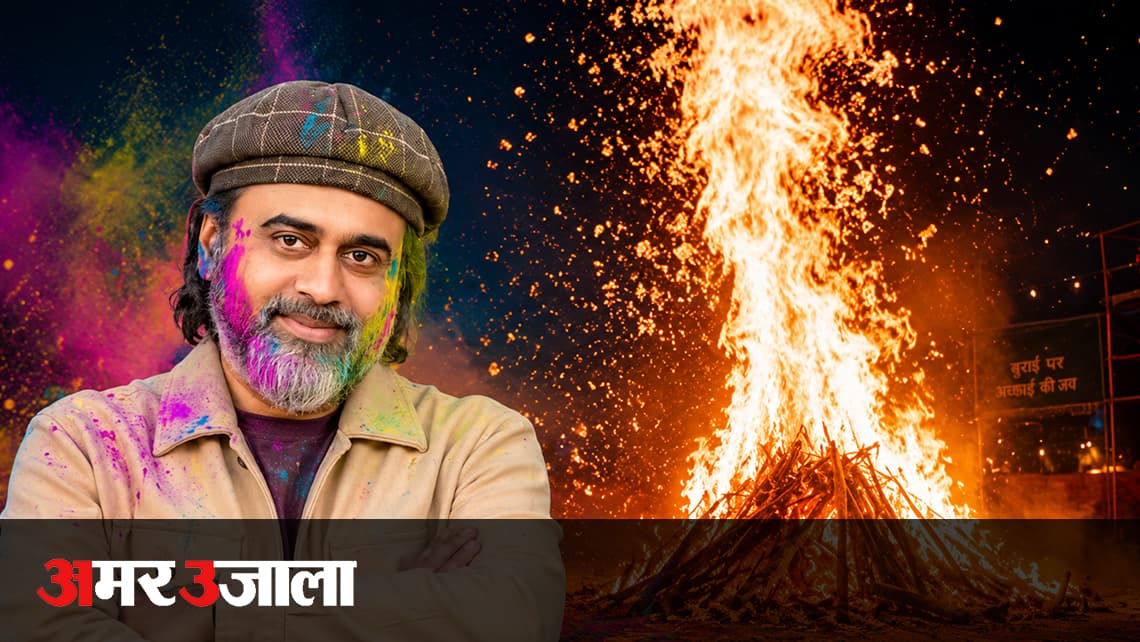
"Acharya Prashant's article on Holi, published by India News: "Holi is not merely a festival of colours and exuberance, but it is also a symbol of the end of ego and false identity. The real message of this festival is tied to self-knowledge and inner purification. However, amidst changing traditions and a culture of ostentation, are we losing its core essence?"

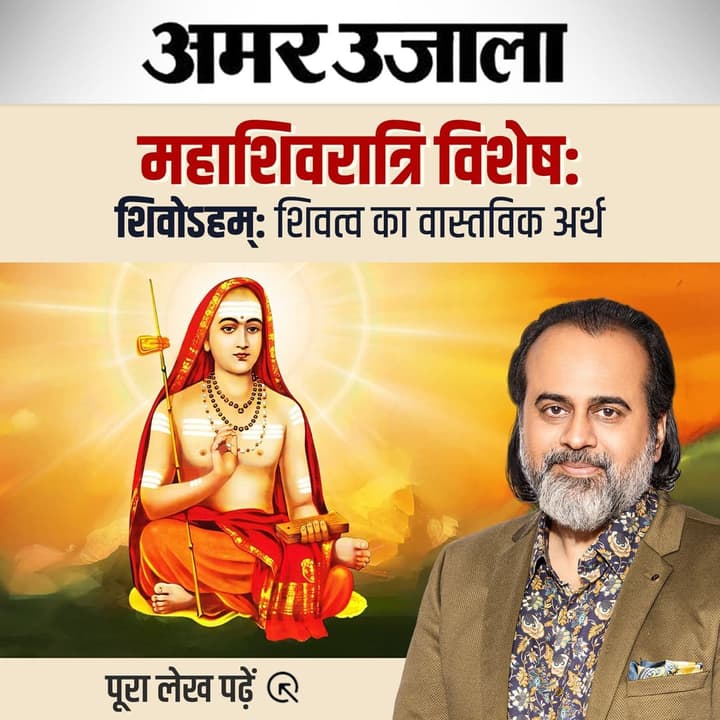
"Once the Upanishads have declared that you must not conceptualize Shiva, nor attempt to give Him any form, color, or shape—that even imagining stories or anecdotes about Him is mere audacity—then if you are told a tale or story about Shiva anywhere else after that, you must reject all such narratives immediately."

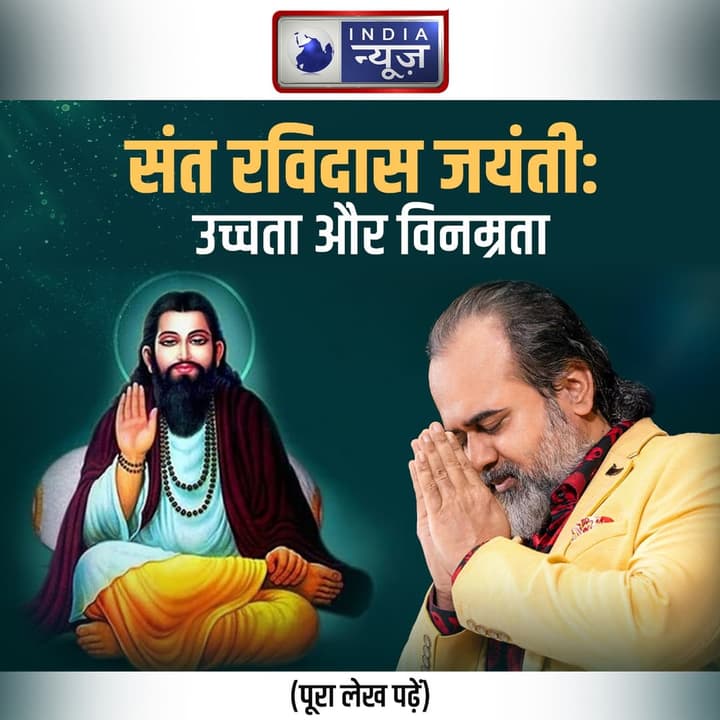
""When Sant Ravidas says that he was born into a so-called lower caste, he is not actually speaking about his caste. A saint is beyond the boundaries of any caste or class. They do not accept the body received at birth as their truth. When he refers to birth as lowly, he is describing the physical condition of all of humanity. He is saying that only a person who can clearly perceive the tendency to remain trapped in the old habits of the body can break free from it."

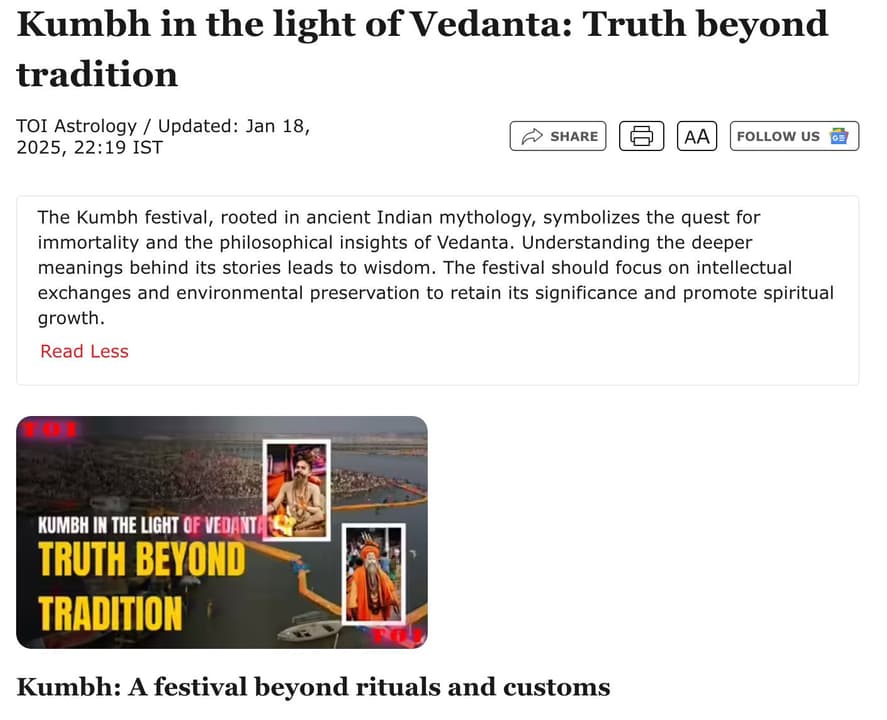
"The Kumbh festival, rooted in ancient Indian mythology, symbolizes the quest for immortality and the philosophical insights of Vedanta. Understanding the deeper meanings behind its stories leads to wisdom. The festival should focus on intellectual exchanges and environmental preservation to retain its significance and promote spiritual growth."

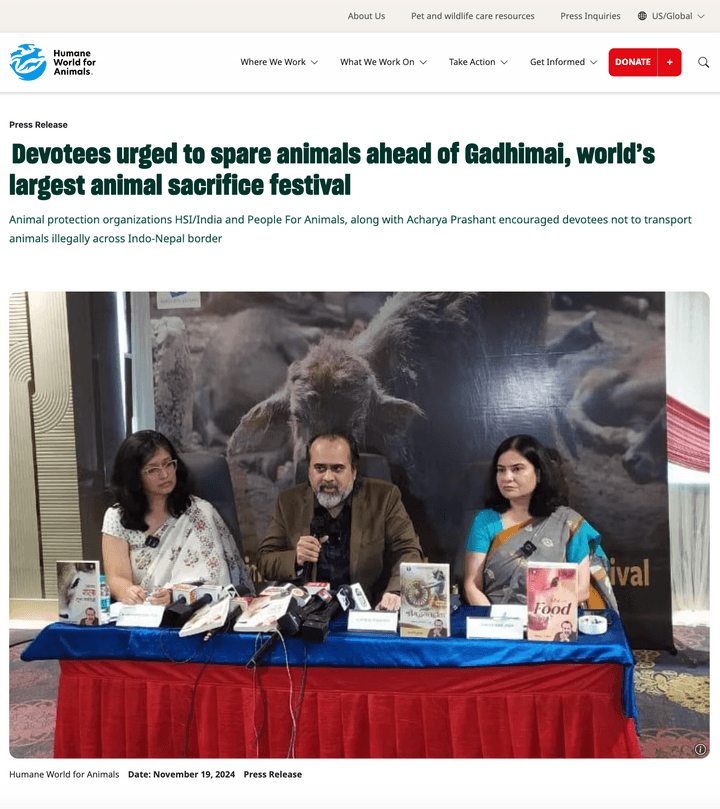
In a press conference held in Patna, spiritual teacher and author Acharya Prashant joined animal protection organizations Humane Society International/India and People For Animals, to urge devotees to refrain from sacrificing animals during the Gadhimai festival.

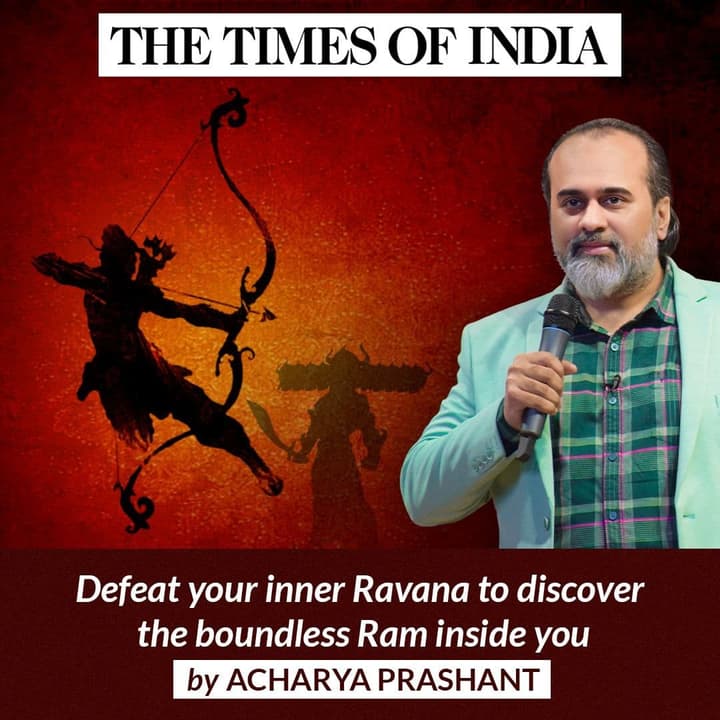
The Times of India article explores the deeper meaning of Dussehra, urging readers to confront their inner Ravana to unveil their true potential, represented by Lord Ram. Acharya Prashant emphasizes that the festival symbolizes the triumph of good over evil within oneself, encouraging introspection and self-improvement. He advocates for overcoming negative traits to discover one's boundless essence. This reflection during Dussehra invites a journey towards personal transformation and spiritual awakening.

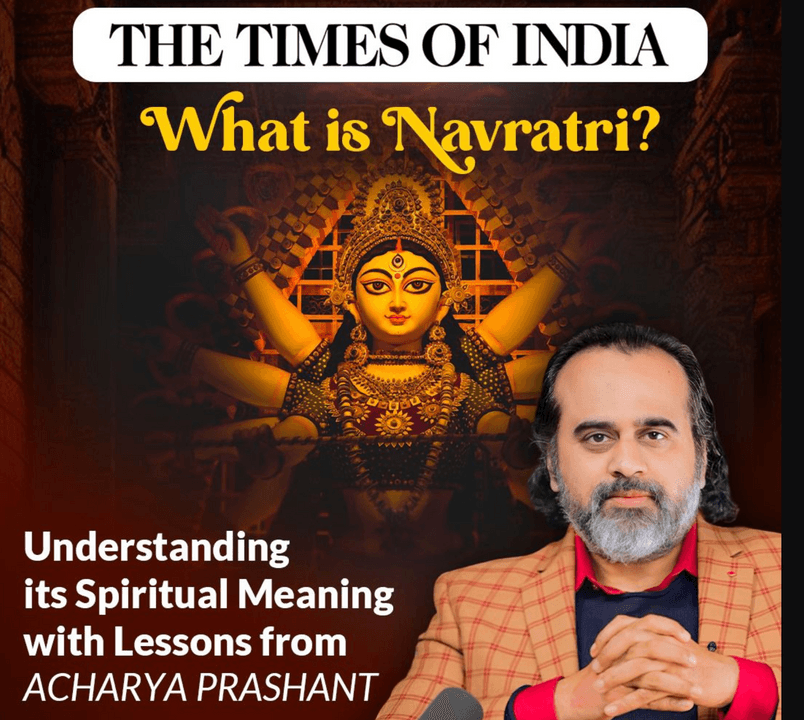
The Times of India article discusses the significance of Navratri, a festival dedicated to the worship of Goddess Durga. Acharya Prashant emphasizes the festival's spiritual essence, highlighting its lessons in inner strength and resilience. He reflects on the nine forms of the goddess, each representing different virtues and qualities, urging individuals to connect these teachings with their personal journeys. The article underlines Navratri as a time for self-discovery and spiritual awakening, encouraging devotion and discipline during this sacred period.

In an article published by The Times of India, Acharya Prashant redefines the meaning of Shradh, emphasizing that it’s not just a ritual but a deeper responsibility to our ancestors. He explains that true honor comes from achieving liberation, fulfilling what our ancestors could not. Acharya Prashant critiques the misconceptions surrounding Shradh, stressing that our focus should be on personal and collective evolution rather than superstitions. Ultimately, Shradh symbolizes a commitment to overcoming ignorance and promoting the well-being of all.

This article in Dainik Jagran presents Acharya Prashant's interpretation of the Gita, in which he explains that the presence of the Gita is the presence of Krishna, and the one who listens to the Gita is Arjuna. Acharya Prashant says that those who do not have the Gita within them are opponents of Krishna. Simply owning a copy of the Gita means nothing; there must be true love and understanding. Without genuine curiosity and realisation toward the Gita, its worship or recitation is of no benefit.

In the article published in Punjab Kesari, Acharya Prashant highlights the deep and ancient tradition of Raksha Bandhan. They point out that this festival is not limited to the sibling relationship only, but it is described in the Puranas as a thread that symbolises protection and respect. This tradition is also associated with the principles of the Guru-Shishya relationship in the Gurukuls and the peace recitation of the Upanishads.

For Punjab Kesari: On the 78th Independence Day, Acharya Prashant while referring to the knowledge of Gita said that the true freedom of India can be fulfilled only when we achieve internal freedom along with external freedom. Describing the philosophy of Sri Krishna as the foundation of self-reliance, he said that without spiritual depth, India's self-reliance will remain incomplete.

The National Bulletin: As India celebrates Independence Day, Acharya Prashant, a globally renowned spiritual leader, challenges conventional views of freedom with profound insights. With over 75 million followers, his teachings delve into the essence of true independence, encouraging us to seek liberation not just from external constraints, but from internal limitations as well.

Magazine: On the occasion of Independence Day, Acharya Prashant said that true freedom is not only political, but mental and spiritual liberation. He pointed out that the conflicts between nations link us to our animal tendencies. Acharya ji called that for true progress we have to bring inner awareness and recognise our inner freedom.

Acharya Prashant, the world’s most followed spiritual guru, has amassed over 75 million followers on social media by demystifying spirituality and challenging superstition. His teachings emphasize that a true Guru is a state of mind, not a physical entity, and he has significantly impacted women's empowerment and veganism in India.

Boldsky reports that as Guru Purnima approaches, Acharya Prashant elucidates the true essence of a guru, emphasizing that a guru is a state of mind and not just a physical being. He stresses that anyone or anything aiding in mental clarity can be considered a guru, highlighting the continuous and evolving nature of true guidance.


During the Geeta Deepotsav programme held at Gautam Buddha University in Greater Noida on Monday, Acharya Prashant dwelt on the outer and inner celebration of Deepawali. He emphasized that while outer celebration is important, it is devoid of any meaning if one's life is not illuminated by the inner light of wisdom. 'Superficial celebrations in the name of religion, devoid of spiritual depth, do not lead to genuine fulfillment,' he said, adding that without inner transformation, Deepawali celebration is meaningless.

Acharya Prashant explores the timeless wisdom of the Bhagavad Gita and the profound significance of Diwali during the Geeta Deepotsav at Gautam Buddha University. Emphasizing selfless action and inner illumination, he delves into the Gita's teachings on overcoming ego and ignorance for a meaningful life in today's world.

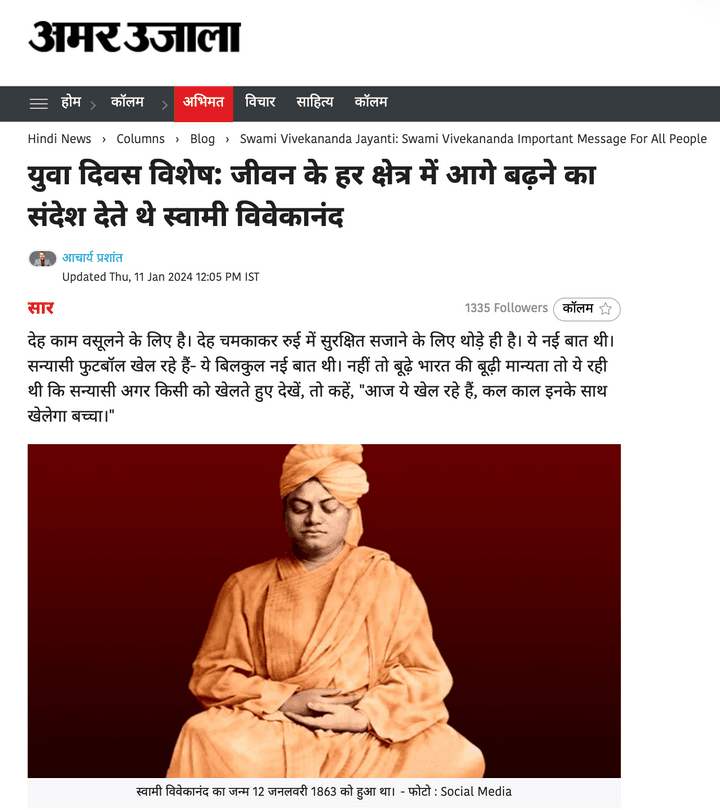
जागरण - आचार्य प्रशांत के अनुसार, जन्माष्टमी को श्री कृष्ण के जन्म का उत्सव मनाने के बजाय, इसे आत्म-निरीक्षण का अवसर माना जाना चाहिए। वे बताते हैं कि श्री कृष्ण का सन्देश जन्म और मृत्यु की सीमाओं से परे है। इस दिन, हमें अपने बंधनों से मुक्त होकर ठहरना चाहिए और अपनी आंतरिक शक्ति की ओर देखना चाहिए, जो कि स्वयं कृष्ण का रूप है। आचार्य प्रशांत युवा पीढ़ी को अध्यात्म की सही राह दिखाते हैं।

Media Infoline: Dive into Acharya Prashant's latest masterpiece, 'Ananda – Happiness without Reason,' published by HarperCollins. This insightful book challenges conventional views on happiness, drawing from scriptures like the Gita and Upanishads, inspiring readers to seek inner clarity and transcend fleeting emotions.

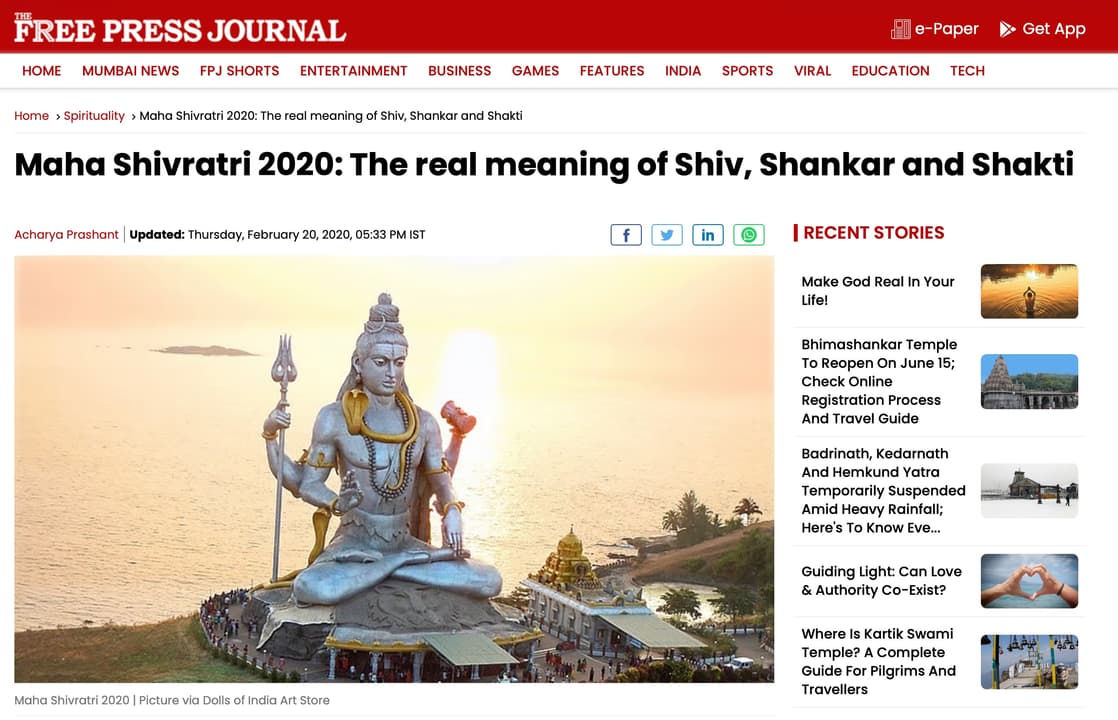
In a article published in The Free Press Journal, Acharya Prashant delves into the spiritual significance of Shiv, Shankar, and Shakti, explaining their roles and interconnectedness. He emphasizes that Shiv represents the formless, ultimate truth, while Shankar is the personification accessible to human understanding. Shakti, the dynamic energy, embodies the entire universe. Understanding these concepts leads to a deeper spiritual awakening and a more meaningful celebration of Maha Shivratri.

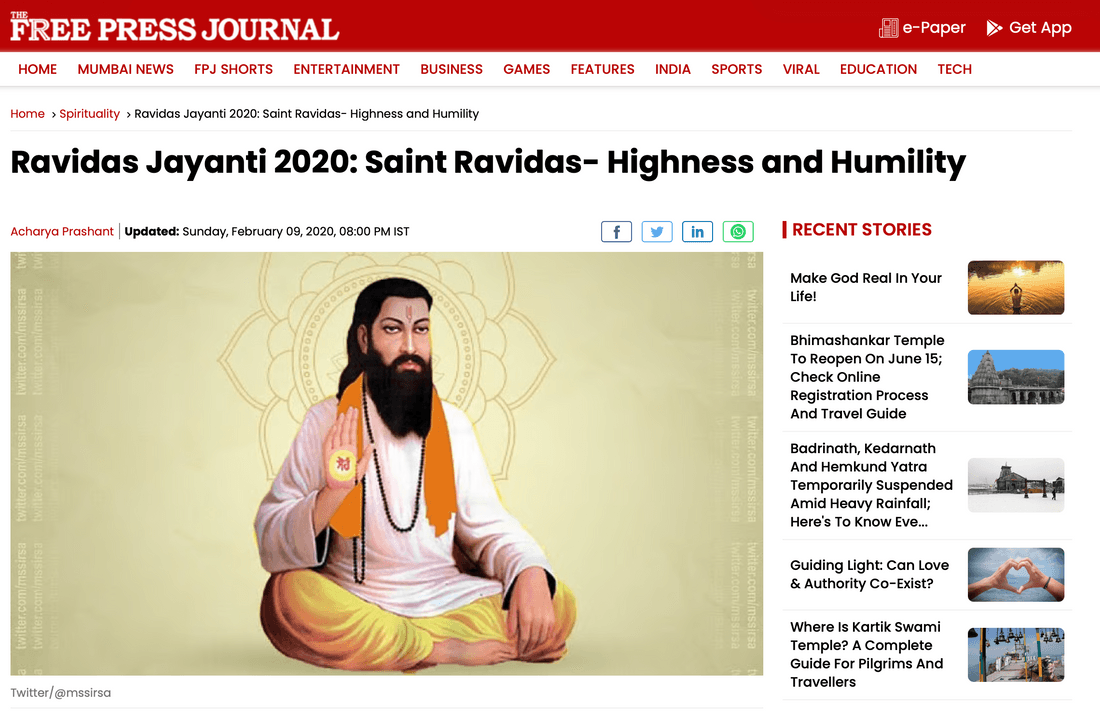
In a article published in The Free Press Journal, Acharya Prashant explores the profound humility and spiritual depth of Saint Ravidas. He highlights the saint's understanding of human limitations and the divine truth. Ravidas' teachings emphasize humility, the importance of acknowledging one's flaws, and the journey towards spiritual enlightenment.

In a article published in The Pioneer, Acharya Prashant reflects on the true essence of Jesus Christ, emphasizing that Jesus represents truth and light, omnipresent in the hearts of those who love him. He discusses how the Bible calls for self-awareness and repentance, urging individuals to recognize their limitations and seek spiritual fulfillment. The article highlights the importance of living by Jesus' teachings and understanding his crucifixion as a reminder of our immediate reality and need for spiritual awakening.

Navratri has recently begun. In the Indian tradition, these days are dedicated to the worship of the nine Shaktis (powers). The joy of celebrating the various forms of Shakti during this grand festival deepens when one also keeps in mind the significance of the festival. The first thing to understand is this: do not take the nine days of Navratri to mean nine separate doctrines. The number nine is symbolic. Nine does not mean one, nor two, nor even three — nine means many. It refers to the infinite forms in which the power of Shiva manifests. Brahmacharini and Mahagauri are serene and forgiving. Chandraghanta, Skandamata, and Katyayani, on the other hand, are the destroyers. They can create as well as destroy — all these kinds of actions are made possible through the power of Shiva, that is, the power of Truth. The question then arises: when all kinds of actions are possible, which action ought to be performed?

Humans of Earth get a great festival to celebrate, but the struggle between the occupants of heaven and hell continues unabated.

This churning of the mind is essentially self-observation through an honest and dispassionate seeing of one’s life, thoughts, fears, desires, actions

In the New Year — new clothes, new delicacies, a trip to a new place, and like every year — new resolutions, new goals. Every year, within just a few days, our resolutions and goals turn into empty words. Everyone wants something new, yet perhaps no one truly attains it. What is the reason? Why do all our resolutions to give life a new color and character fade away with time? Why, in the desire to attain something new, do we end up merely repeating the old? Could it be that the very quality of our resolutions is lacking?