Living Authentically Means Living Freely

Acharya Prashant

8 min
519 reads
Living Authentically Means Living Freely
The authentic one can never be harmed because he lives freely and without dependence. If someone can inflate you with their words, they can also deflate you. By accepting your identity from someone else, you have needlessly made yourself a beggar. The authentic person does not want anything from any external being. He can have a relationship, but he’ll always be ready to leave. And that does not mean the relationship cannot have love. Love and desire are different things; desire means: I want to exploit; love is about giving without expectation. This summary has been created by volunteers of the PrashantAdvait Foundation

Questioner: Sir, acknowledging a fact internally as well as externally requires authenticity within a person. And I’ve read from your previous books that we should be an authentic person, as that leaves no room for fear and insecurity within us. But sir, it’s not always possible to be an authentic version of ourselves, because it’s sometimes not the best version or the best thing of ourselves that can be.

Acharya Prashant: How do you know?

Questioner: Sir, because I think a lot of us, authentically, a lot of us are kind people. I would say “nice” is a word I should refer to; which might end up making us get used by some people.

Acharya Prashant: No, no, no, I’m glad you asked this. What she’s saying is: the authentic self is probably a nice self, a good one. And what I have observed in this world; correct me where I go wrong; what she’s saying is, what I have observed in the world is that good guys finish last and the kind ones are exploited. Right?
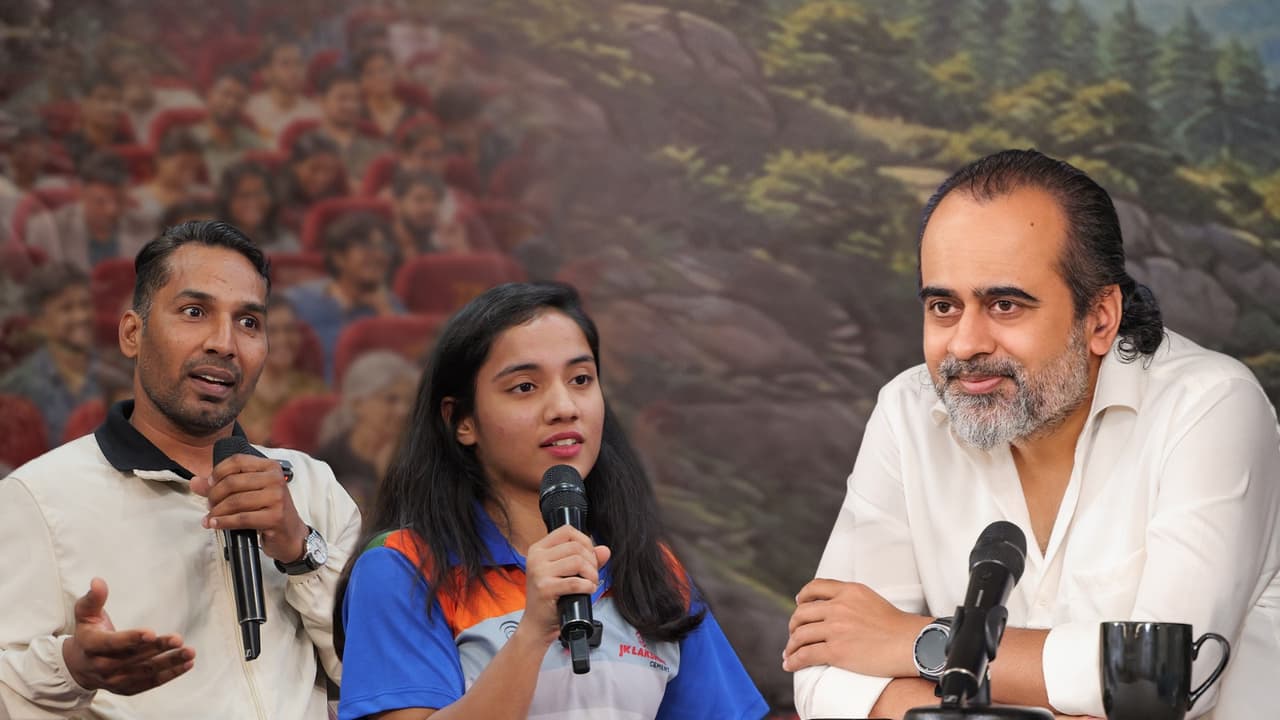
Questioner: Yes sir.

Acharya Prashant: So she’s saying there is a fear in being authentic or acting authentically. No. The authentic one can never be harmed, mind it. The world will try to harm, but there would be nothing here that can be harmed. First of all, you must have something that can be taken away. I can be harmed only if, for example, you have given me this mic, right? You can take it away. And if I am very, very desirous of this mic, then I declare you have harmed me. Because I wanted this mic, it came from you, you took it away, and I’ll say I have been harmed.

The authentic person does not want anything coming from any external being. He can have a relationship, but he’ll always be ready to leave. Therefore, who can harm him? You want this mic? It’s anyway yours. Take it away. I’m not harmed.

You gave me some reputation. You gave me that reputation. Now you can take it away. One day you came to me and said, “Such a kind girl, such a sweet girl,” and now you are saying, “Such a bitch.” That’s fine. It came from you; it went back to you. How am I harmed?

Questioner: But sir, when we are praised, when we are appreciated for how authentic we are, it instills a sense of happiness.

Acharya Prashant: Happiness nahi dependency.

Questioner: Yes sir, dependency. And when that’s taken away, we feel that we are...

Acharya Prashant: So then that’s the trick. They will applaud for you, and you will become dependent. And next time they will say, “Give us 40 rupees only. Then we will applaud.” Next time they’ll say 400; after that, four million, and you’ll become a slave.

So don’t give any value to who applauds for you or who doesn’t. Don’t get puffed up. “Ah, gorgeous!” No, no, no, no, you know what’s going to happen next. 40 rupees. It starts from there. If you can inflate me with your words, the corollary is that you can also deflate me, puncture me. Right? You said, “Sir, you are wonderful,” and I took that. And next day you will say, “Sir, you are toxic.” I’ll have to take that as well because I have now needlessly become a beggar, accepting my identity from you.

Living authentically means living freely; without dependence.

External sense; we are all dependent. I depend on this chair to sit here. That is fine. Inwardly, you should be fiercely independent. Your inner self should not depend on anything or anybody. Externally, there are dependencies which are all right.

Listener: But sir, if we are our authentic selves, then in many cases the society, as I said earlier as well, won't accept. We have to mask our inner selves using fake; like we can’t be our authentic selves. We have to become a coconut.

Acharya Prashant: How do you reply to him? Using the answer I gave you, how do you reply to him?

Questioner: That if we’re authentic enough, then I think these external factors shouldn’t affect us. I mean, people will say things, society will say things, but I think we should remain unaffected.

Acharya Prashant: See, good learner.

Listener: But still it hurts our inner, like it hurts.

Acharya Prashant: Hurt can happen only when there is an expectation. Have you noticed that? Only when there is an expectation can there be hurt.

You gave it (mic) to me. I took it for a practical reason. I never expected to take it home. Now you’re asking it back, why will I be hurt? I never expected this thing to truly belong to me. It came with time, it came from somewhere; I always knew it would go back. There was no expectation that this would permanently belong to me. Because there is no expectation, there will be no hurt.

And this “expectation,” that I’m putting mildly. It is often a deep, vicious desire. And the more you desire from someone, the more power you give to that one to hurt you. Have you noticed that? The ones you deeply desire from are the ones you give maximum power to. Now they can hurt you very, very badly. Why become a beggar?

That does not mean that the relationship cannot have love. But love and desire are different things. Desire means I want something from you and I want to exploit. And love is about giving without expectation. Getting it? You will have to live with it for a while, and you'll have to experiment with it, and then it will start showing itself more clearly.

Listener: The emotions go out of control often.

Aacharya Prashant: All emotions are grounded in desire, please try to observe that. There is always self-interest at the basis of all emotions; all emotions without exception.

Questioner: Sir, I was going to ask a question but it got answered, I think. But you have to tell me whether I have understood it correctly or not.

The idea that rose in my mind was: how do you accumulate experience without accumulating desire?

Acharya Prashant: No, you have to pass through experience. You don't have to accumulate it. It's raining, right? And I have to reach here. I'll have to pass through experience without resisting it but also without accumulating it. I don't want to resist the rain, the rain is wonderful, but I also don't want to accumulate the rain, otherwise I'll be like a pool here.

So experience is not to be resisted. If it comes your way, fine. You don't have to say, “Oh, I'm a good boy, I will avoid that kind of experience.” No. You also don't have to rush after the experience, “That experience is so seductive, let me go and have it.” Don't rush after it, don't avoid it, but also, most importantly, don't let it scar you. Don't let it leave an imprint on you. Pass through it without getting touched.

Questioner: Without getting modified in the process?

Acharya Prashant: Learn, but don't accumulate. Every experience should be an opportunity enabling you to look at yourself and thereby learning. Right? The more you look at yourself, the more you learn about yourself. So that's the value, that's the importance: “This new experience taught me something about myself.” But that does not mean I accumulated something from this. Don’t accumulate.

Questioner: So sir, I agree that expectations can harm us, lead to sadness. But if we leave our wishes, desires and all that stuff, wouldn’t life lose its meaning?

Acharya Prashant: No need, don’t have to leave anything. Why will you leave anything? On what basis? On what basis will you decide what to leave and what not to leave? The real person, the wise one, does not accumulate anything and equally does not leave anything. You don’t have to drop anything. That old model of spirituality involving renunciation is a very superficial one.

Just as you don’t have to gather something, equally you don’t have to leave anything behind. Pass through it.

You don’t have to drop anything. What is to be dropped will drop on its own. Like yellow leaves from the tree, they drop on their own. You don’t have to plan, you don’t have to act. It happens.

This article has been created by volunteers of the PrashantAdvait Foundation from transcriptions of sessions by Acharya Prashant
Comments
LIVE Sessions
Experience Transformation Everyday from the Convenience of your Home
Live Bhagavad Gita Sessions with Acharya Prashant
Categories