Don't be a "Good Girl" - Listen to Devi

Acharya Prashant

14 min
333 reads
Don't be a "Good Girl" - Listen to Devi
“That brother is such a rascal. He roams all over the city and does this and does that. But this one is such a nice girl. She follows all the parental instructions, does her homework properly, gets good grades in school, and the brother is a rascal.” But the brother will end up in Silicon Valley, and the sister will end up in the kitchen. Don't be a good girl with your mother sitting next to you. That's the advice I'm offering. This summary has been created by volunteers of the PrashantAdvait Foundation

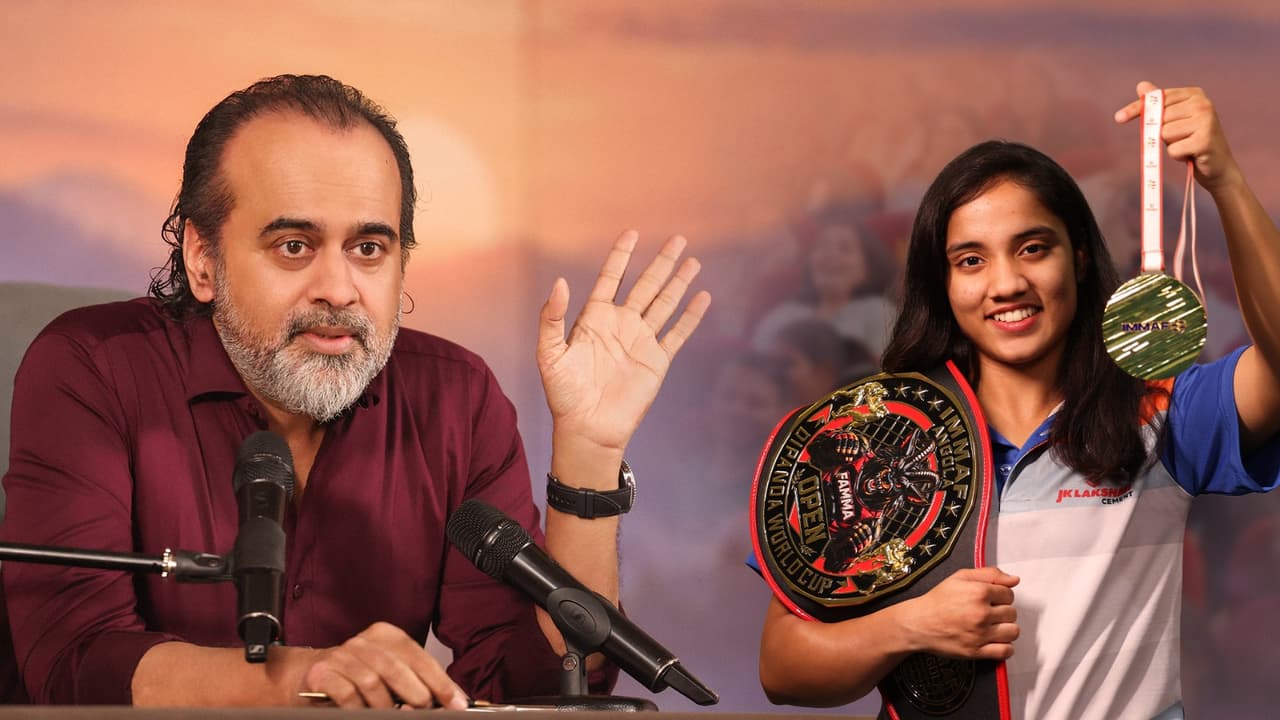
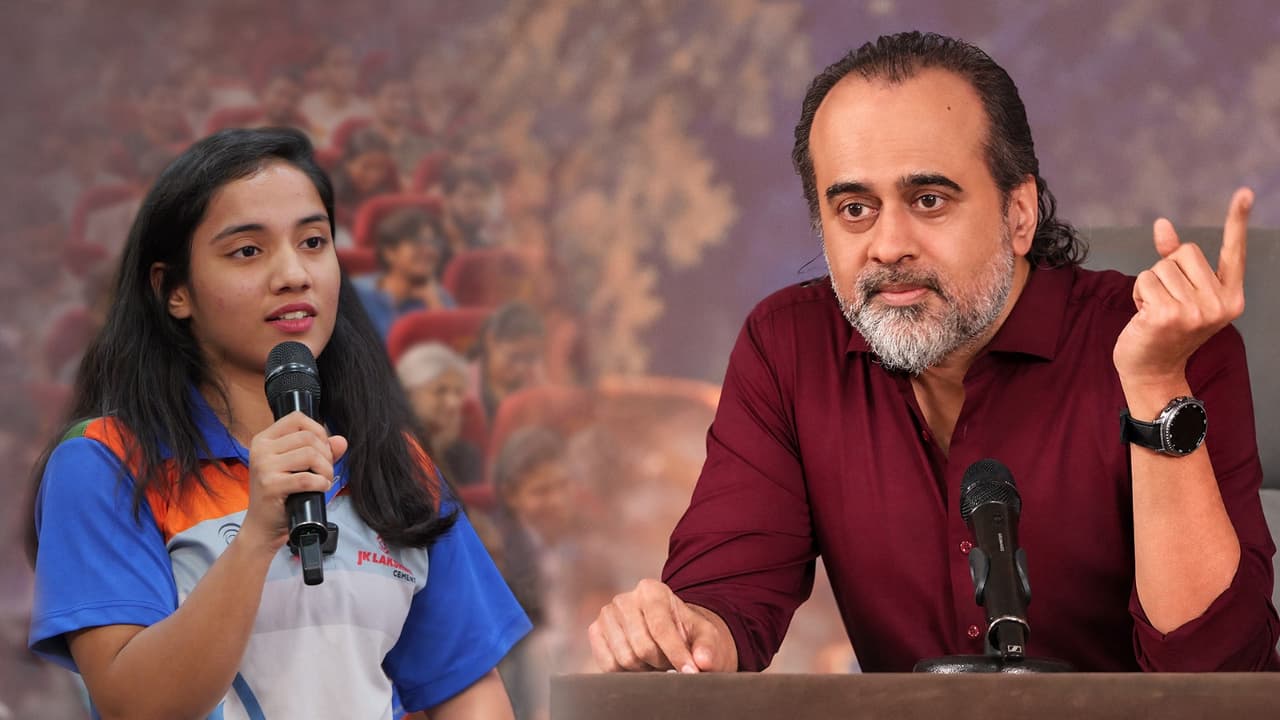
Questioner: Sir, I'm a 14-year-old, and sir, every year for 9 days in India, men, every Hindu, they come and they worship a goddess for 9 days. And for the rest of the year, they forget about it, and they beat her, and they hate her, and they'll not send her to school, and they'll oppress her for everything. So for these nine days, just for these nine days, they'll remember the goddess. But for the rest of the year, the goddess is nowhere to be found.

I want to know how I can make people understand how significant it is to respect a person throughout the year and respect a gender throughout the year and not oppress them.

Acharya Prashant: First of all, I appreciate the spirit of your question. But at the same time Devi is not about a particular gender, though where you are coming from is a very proper place. Yes, there is a very perverse kind of gender discrimination and exploitation here, but the fact still remains that Devi does not represent a particular gender. That's a very common misunderstanding, that Devi represents the feminine side of existence, and all that people are holding forth on, and gurus and all. This is sheer nonsense. Devi does not represent the woman. Not at all. Just as Shiva does not represent the man. Shiva does not represent the male, or the man, or Nar. No. No way.
What does Devi represent, and where does the entire lore and the legend of Devi come from? We have to go to that. Over the past few days, you have been consistently here, and you would have heard me talking of Durga Saptashati (Devi Mahatmya). That's the name of the scripture. It's a part of a wider body of scriptures, but it is held to be a scripture in its own right. Durga Saptashati That's where the whole symbolism containing the Devi comes from.

Devi represents prakriti itself. Not one species, not one gender, not one place, but the entirety of the whole cosmos.

For practical purposes, you could say, because we are little beings on a little planet, you could say Devi represents the sum total of all sentience we have on this planet. However, there is a little catch. In the books of Devi. It is not only human beings that are taken as sentient.

Animals have a very prominent place. And we are still not done because it's not even just the animals. It also includes the rivers and the mountains. So Devi represents all of that, the trees, the forests. Getting it? And it's a beautiful scripture to read, very enlightening, provided you get the symbolism. If you take literal meanings, then you'll be left on the surface.

So it's a very beautiful scripture to read, and in fact, if you don't find time over the entire year, these nine days you must make use of. Getting it? So there is Devi, which is all this (pointing towards everything outside.), and the scripture opens with pointing that even the highest gods are no match for the Devi. What does that mean? That means that

Even the highest realization that you can attain will come only by being in sacred contact with nature.

If you cannot learn from the trees and the rivers and the mountains, and the animals, and the kids, and the woman, and the man, if you cannot learn from them, then it's pointless to think that you will gain from a temple or a mosque or a book or a priest. Impossible. It is from being in very discrete, yet very loving contact with life, that one learns.

And then there are all these demons carrying very colorful names. You would have heard of them, right? Chandmund and Dhumrlochan and Mahishasur. You have heard these names. So there are three parts there and several chapters, and the various chapters are divided into three parts. In every part, there's a fresh set of demons that come over doing something very bad, very mischievous, and even the gods cannot control them, such powerful demons. The highest gods can't control them — Vishnu, Mahadev, what to talk of the ordinary ones like Indra and Varun. They are all held captive by all these demons.

And then the gods pull their energies together in one way or the other. In every part, Devi arises. Though the names that Devi assumes in all parts are different, yet it is the same mother, the same Devi, the central one.

The idea is to say that irrespective of how learned you think you are, who your gods are, Prakriti is beyond everything and the mother of all understanding, knowledge, and liberation. And if you do not acknowledge that, then you will want to consume Prakriti, and that's who the demons are. Every chapter in each of the three parts, that's what they're attempting to do. You know what they're trying? “We’ll capture Devi, we’ll defeat Devi.”

In the last one, in fact, Devi comes in a very beautiful form atop the Himalayas, and they say, “No, no, no, we want to marry this one because she's so beautiful.” And the Asur had become very powerful by that time, and they said, “We have all the great and precious things in our lavish treasury, and she looks like the most beautiful woman, so she should also be a part of our treasure.”

So they send, first of all, messengers, and the messengers tell Devi, "Our kings want you." And Devi plays innocent and says, "You know, I'm just a poor lady, and I'm standing here, you see, but I have put a condition, taken a vow: somebody who can defeat me can take me as wife, so please defeat me." And when they come to defeat her, she slaps the life out of them. There is actually an episode clearly mentioned that Devi is annihilating them just by slapping them. They come, and one tight slap, one more tight slap, and they're all gone.

You get the idea? You look at the modern man's tendency to eat away at nature, to destroy nature, to subjugate nature, to damn the rivers, to clear the forests, to dig holes and mines, excavate fossil fuels, release carbon dioxide into the atmosphere, and wipe out entire species and everything that is possible. We are destroying nature, and that's the characteristic of the demons, and that's what the scripture is written to warn against.

If you mess with nature, there is no way you will be spared, because this nature itself is Devi.

Getting it?

To make things easier for the reader, the learner, we personalize nature in the form of a lady, a venerable lady called Devi. But that's just a symbol. That doesn't mean Devi is a woman. Are you getting it? We have a tendency to, you know, this is called anthropomorphization — whatever there is, we want to represent it in human form. So we nature also, because otherwise nature becomes an abstraction. If everything is nature, then how do I talk to nature?

Listener: Personification.

Acharya Prashant: Yes. So we personify nature so that we can conveniently assume that we are talking to nature. So that's who Devi is, and the entire scripture exists to warn against the indiscrete exploitation of nature. And that's why the scripture is very, very relevant today — very relevant in the age of the climate crisis.

When I read it first, I was almost shocked towards the end when all the demons were gone, finished, killed. It says that the effect is that the skies have cleared, the air is fine, unpolluted, light, and the rivers are flowing freely. Sunlight is now raining as it should, and everything has attained its proper place in the universe. And by everything, there is a very clear indication that we are talking of all the things that we have corrupted and polluted today. Are you getting it? So that's who the Devi stands for.

Now, the kind of treatment that women get in our country and in the world over. If at the center of our being is the ignorant and exploitative ego, it will exploit whosoever is taken or found as powerless. Please tell me, why don't you eat the elephant? Right? And today, somebody might, but historically, mankind isn't known to have eaten too many elephants. Why? Because the elephant was difficult to catch. It's a sheer power equation. Nothing more than that.

The poor chicken is easy to catch and breed. You can not only catch it but breed it in captivity. The same thing applies to all the milch cattle. We extract milk from them because you can catch them. They can't run fast. Also, they are not designed to be aggressive. That's not how their genetics are. They won't attack you too much. So, you hold them by the rope, and then you milk them and do all those things because the ego is exploitative. So be it the goat, the chicken, the cattle, or the sheep.

Imagine the sheep were actually a lion. Would you still hold it and shave it and extract wool for yourself? How many things do you use that come from the lion's body? But when it comes to the body of the cattle, or the chicken, or any other little thing, pigeon or rabbit — it's a power equation. And that's the only way the ego operates. It cannot love. It can only exploit. The moment it sees somebody powerless, it pounces on it, grabs it, and exploits. And that's the reason why women have been exploited, because they have remained powerless.

Historically, we know why they were powerless, because they didn't have enough muscle but had the womb. Now, that proved to be a deadly combo in the past because the only source of energy was human muscle and later on animal muscle. You didn't have any engines. You didn't have fossil fuel. You didn't have nuclear energy. You didn't have tidal energy or solar energy. Where did energy come from? The muscle. And women didn't have as much muscle. Simple. That was the only reason — lack of muscle.

So men needed muscle for agriculture, for fighting wars, for doing all the things. Don't you require energy? Today also, you see, it is for energy that so many wars are being fought. Why is the Middle East always burning? Because it has energy. There's a war for energy, right? And everybody wants to capture it. So the same thing was happening in the past also.

First of all, the woman didn't have muscle. Secondly, she had the womb, and she was continuously pregnant because there was nothing to protect her against getting pregnant, and infant mortality was very high. Kids would get born and then they would die. So she was continuously pregnant. One after the other, one after the other. So you are physically weak, and then you're also immobile, and then there are three or four kids always around you, and somebody is sick, and somebody has to be still breastfed, and all kinds of things are happening.

So that was the reason she became powerless. But that is no longer the case in the knowledge economy. Today, knowledge doesn't come from your muscles. Today, muscle power has very little relevance, very, very little relevance. Today, power flows from the brain and wisdom.

Therefore, there is no reason the woman stands to be exploited, but she is still getting exploited. Now why is that happening? Because even if you have the brain, you must be internally free to use the brain. Otherwise, the brain will remain like a mass of meat sitting here doing nothing. If you convince the woman that her job is not to think but to serve, then in spite of having the brain, she will not use it. And when she does not use it, then you will say, “They don't have the brain. Don't give them any kind of power or authority. They are brainless. Let them just breed kids. That's what they are good for. Or let them go to the kitchen and do something. Don't give them any brainy work.” Do you see this?

Today, the problem is not the muscle. Today, the problem is tradition. That is what is holding women back. They are still thinking of themselves from the eyes, the lenses of the past. They have not been able to get rid of history, and that is very funny. Think of it, because there is nothing for women in history. In history, all that you have is a lot of exploitation of women.

When India got independence, search for yourself. How much was the female literacy rate?

Questioner: It was very low.

Acharya Prashant: Not just very low — it was close to zero. In most places, only in certain cities were there some literate women. Otherwise, over several hundred square kilometers, it was possible that you could count the number of literate women on your fingers. So pathetic was the literacy rate when India got freedom.

And why do women tolerate that? Today you have legal protection. Today there is technology. Today there is everything. We still tolerate that because we think it is good to live by history, or social sanction, or tradition, or whatever one finds important to be a good girl in the eyes of others. You know, others must approve of me, and they will approve of you only if you abide by history. So that is the way women choose bondage today. Papakipari, You know, good girl.

“That brother is such a rascal. He roams all over the city and does this and does that. But this one is such a nice girl. She follows all the parental instructions, does her homework properly, gets good grades in school, and the brother is a rascal.” But the brother will end up in Silicon Valley, and the sister will end up in the kitchen. Don't be a good girl with your mother sitting next to you. That's the advice I'm offering.

Questioner: Thank you, sir.

Acharya Prashant: Yeah. Does the Devi look like a good girl? Be like the Devi (sticking out the tongue and making big eyes).

This article has been created by volunteers of the PrashantAdvait Foundation from transcriptions of sessions by Acharya Prashant
Comments
LIVE Sessions
Experience Transformation Everyday from the Convenience of your Home
Live Bhagavad Gita Sessions with Acharya Prashant
Categories